
Ipecac
Cephaelis ipecacuanha (Brot.) Tussac
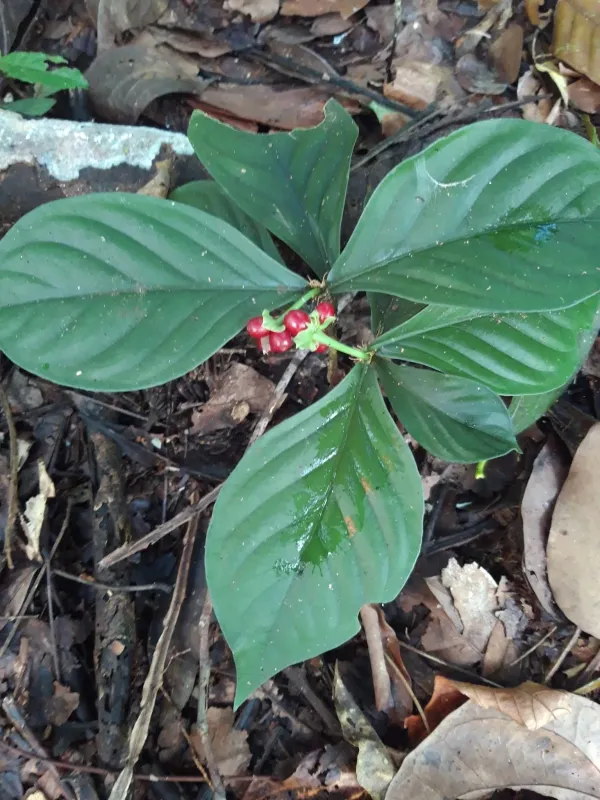
Description
Sowing dates
Ipecac (Cephaelis ipecacuanha) is a slow-growing evergreen shrub belonging to the Rubiaceae family. Historically native to the tropical rainforests of Brazil, its agricultural cultivation requires specialized tropical greenhouse conditions.
Propagation is primarily achieved through stem cuttings or root divisions rather than seeds, as the latter often exhibit poor viability and erratic germination patterns. Maintaining high humidity during the rooting stage is essential.
Young plants are extremely delicate and require consistent care during the first year of growth. The slow development cycle necessitates a long-term commitment from the agricultural producer.
Commercial cultivation usually involves planting in specialized beds that mimic the forest floor environment. Proper spacing is critical to ensure airflow and reduce the risk of humidity-related fungal outbreaks.
The selection of planting stock must prioritize high-alkaloid yield potential. Agronomists often evaluate parent plants to ensure the consistency of the final chemical composition in the harvested roots.
Growing requirements
Ipecac requires a tropical climate with high ambient temperatures, typically ranging from 20 to 30 degrees Celsius. Exposure to frost or sudden cold snaps can be fatal to the crop.
The plant thrives in deep shade and high humidity. In a controlled farm environment, shade cloths are used to replicate the canopy of a tropical forest and prevent solar scorching of the foliage.
Soil requirements are quite specific: the substrate must be rich in leaf mold, well-draining, and slightly acidic. Compacted or waterlogged soils quickly lead to root rot, the most common cause of crop failure.
Irrigation must be frequent yet controlled. The substrate should remain moist to the touch but never saturated, as the plant's root system is sensitive to prolonged anaerobic conditions caused by stagnant water.
Due to the specific environmental needs, commercial cultivation is restricted to tropical or subtropical zones or high-tech greenhouse operations capable of maintaining strict climate regulation.
Yield
The economic value of Ipecac is concentrated in its dried roots and rhizomes, which contain emetine and cephaeline. These alkaloids are highly prized by the global pharmaceutical industry.
The crop cycle is lengthy, with roots typically reaching the desired harvest size and alkaloid concentration after 3 to 4 years of growth. Harvesting earlier results in significantly lower secondary metabolite content.
Yields are measured by the dry weight of the roots. Because the entire plant must be removed for harvesting, producers must plan for continuous rotation and replanting to maintain a steady output.
Quality control is vital; the presence of foreign organic material or improper cleaning can degrade the market value of the harvested roots. Post-harvest processing includes thorough cleaning and controlled drying.
Market demand remains consistent for high-grade pharmaceutical-quality roots, though high production costs due to labor-intensive cultivation limit the overall global supply.
Main diseases and pests
The primary threat to Ipecac plantations is fungal pathogens, particularly those causing root and crown rot. High humidity levels, while necessary for growth, create a perfect environment for such infections.
Nematodes pose a major risk to root health. These soil-borne pests damage the root tissue, directly impacting the quality of the pharmaceutical alkaloids and reducing overall plant vigor.
Leaf-eating insects in tropical regions can cause significant damage. Regular scouting and integrated pest management practices are necessary to prevent infestations from compromising the plant's health.
Weed management is a manual process. Because Ipecac is sensitive to chemical herbicides, hand-weeding is required to prevent competition for nutrients and space in the dense plantation beds.
Poor ventilation within greenhouse facilities is a common trigger for powdery mildew and other foliar diseases. Ensuring adequate airflow is an essential component of professional farm management.
Harvesting
Harvesting is a manual operation involving the gentle extraction of the root system. Workers must carefully loosen the soil to retrieve the fine, delicate roots that are often buried deep.
Immediately after harvest, the roots undergo a rigorous cleaning process. All traces of soil and debris must be removed, as impurities directly affect the purity of the pharmaceutical extract.
The drying process must be slow and steady. Excessive heat or direct sunlight will cause the volatile active compounds to break down, thereby significantly reducing the efficacy of the medicinal product.
Once dried, the roots are sorted by size and quality. Storage requires airtight containers to prevent moisture re-absorption, which could lead to mold during the transport phase.
- Careful manual extraction
- Thorough cleaning
- Slow shade-drying
- Size grading
- Moisture-controlled storage