
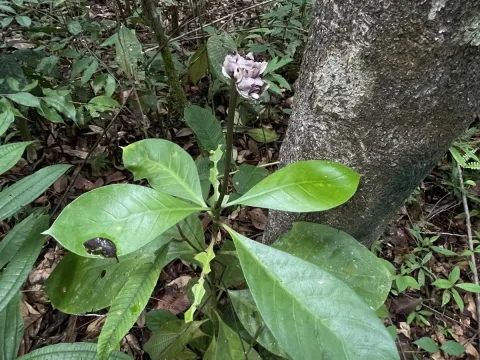
Ipecac
Carapichea
Ipecac (Carapichea ipecacuanha) is a perennial evergreen subshrub belonging to the Rubiaceae family. In natural habitats, it propagates both by seeds and vegetatively, with seed propagation characterized by a lengthy germination period.
What the section contains

Ipecac
Commercial plantations are often established using cuttings obtained from rhizome segments. The optimal time for rooting is a period of high humidity and stable temperatures, which allows the plant to form a root system more efficiently.
Seed sowing requires a sterile substrate and strict adherence to temperature regimes, as seedlings are extremely sensitive to environmental fluctuations. The crop grows very slowly during the first two years of its life cycle.
For vegetative propagation, root segments are planted in shaded nurseries protected from direct sunlight. The use of rooting hormones significantly increases the survival rate of the planting material.
Planting density should provide sufficient ventilation between bushes to avoid the development of rot processes in the dense tropical climate required for the plant's growth.
Ipecac is a typical representative of tropical rainforest flora, requiring high relative humidity at levels of 80–90%. The plant tolerates direct sunlight very poorly and requires shading (about 50–70% shade).
Optimal growth temperatures range from +22 to +30 degrees Celsius. Even short-term temperature drops below +15 degrees can cause growth stagnation or plant death.
Soils must be loose, rich in organic matter, and well-drained, as water stagnation is fatal to the delicate root system. Slightly acidic forest soils with high water-holding capacity are preferred.
Regular watering is essential; the soil must remain constantly moist but not waterlogged. In regions with a pronounced dry season, overhead irrigation is necessary to maintain a stable microclimate.
Fertilization should be based on organic matter: the application of compost or well-rotted manure provides the necessary nutrient supply without the risk of soil salinization from mineral salts.
The primary value of the plant lies in its root, which contains the alkaloid emetine, used in the pharmaceutical industry. The yield of dry roots per hectare depends on planting density and the age of the plantation, typically ranging from 300 to 600 kg.
The maturation period for roots to reach a commercial concentration of alkaloids is at least 3–4 years. Early harvesting does not allow the plant to accumulate a sufficient amount of active compounds.
The quality of the raw material depends directly on drying conditions. After removal from the ground, the roots are cleaned of soil, washed, and dried in the shade to remove moisture while preserving their characteristic odor and color.
The harvesting process is labor-intensive, as it requires careful excavation of the entire root system without damaging the small rootlets where the highest concentration of emetine is found.
Global production is limited by the specific requirements of the plant, which is why the demand for high-quality ipecac root has remained consistently high for decades.
The main threat to ipecac plantations is fungal diseases that develop under high humidity and stagnant air. Root rots can destroy a significant portion of the crop in a short period.
Among pests, nematodes cause the most harm by attacking the root system and preventing normal nutrient uptake. Various aphid species and spider mites may also infest the leaves.
To prevent the spread of infections, it is necessary to strictly follow crop rotation and carry out regular weeding, removing weeds that may serve as intermediate hosts for pests.
Upon detecting signs of fungal infection, affected plants must be immediately removed from the plantation along with the soil ball to prevent the contamination of neighboring specimens.
Biological control methods are preferred over chemical ones, as the use of pesticides can negatively affect the quality of pharmaceutical raw materials and the purity of the final product.
Harvesting is carried out using selective or total methods after the plants have reached 3–4 years of age. During this time, the roots reach optimal thickness and maximum content of active substances.
Garden forks are used for excavation to minimize rhizome breakage. It is important to recover the largest possible volume of root mass, as it is the only commercial part of the plant.
After collection, the raw material is subjected to immediate cleaning to remove soil residues and prevent rot and contamination by microorganisms. Washing must be done carefully to avoid damaging the outer root layer.
Drying is performed in well-ventilated rooms protected from direct sunlight. Overheating or accelerated drying can lead to the degradation of alkaloids.
Storage of the dried root requires strict humidity control to prevent mold, which critically reduces the value and quality of the pharmaceutical raw material.