
Ipecacuanha
Carapichea ipecacuanha
Description
Sowing dates
Ipecacuanha is a slow-growing tropical shrub that is propagated primarily through vegetative methods, such as stem cuttings or division of rhizomes. In commercial practice, seed propagation is rarely employed due to low germination rates and a long development cycle.
The optimal time for planting cuttings is during periods of high atmospheric humidity, which facilitates rapid root formation without tissue desiccation. Planting is conducted in specially prepared nursery beds, sheltered from direct sun.
Temperature during the rooting stage should be maintained between 25 and 30 degrees Celsius. It is crucial to ensure a stable microclimate, as young plants are extremely sensitive to fluctuations in environmental conditions.
Planting involves a loose, humus-rich substrate mixed with leaf mold and sand to improve drainage. During the first year of growth, plants require careful monitoring to ensure proper root system development.
Ipecacuanha belongs to the Rubiaceae family and is a perennial shrub native to the humid tropical forests of Brazil, Colombia, and Central America.
Growing requirements
The crop has strict requirements for growing conditions, preferring shaded areas with high atmospheric humidity. Direct sunlight can cause leaf scorch and significantly inhibit the plant's growth.
Soil must be deep, fertile, and well-drained, with an acidic to slightly acidic pH. Waterlogging leads to rapid root rot, making it essential to implement artificial drainage if necessary.
The plant requires constant air circulation but is sensitive to strong winds that can dry out the soil. It is best cultivated in agroforestry systems where ipecacuanha thrives under the canopy of taller trees.
Water requirements are high; during dry spells, irrigation is necessary to keep the soil moisture levels consistent. Water deficiency results in thinner roots, which significantly lowers the quality of the pharmacological raw material.
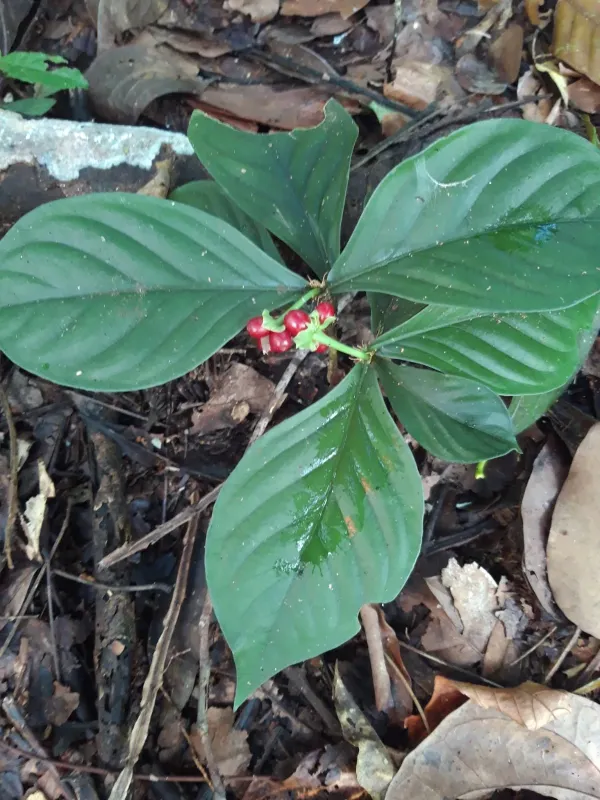
Botanically, ipecacuanha is a small shrub reaching 20 to 40 centimeters in height, featuring opposite leaves and small white flowers arranged in head-like inflorescences.
Yield
The yield of ipecacuanha is assessed based on the concentration of accumulated alkaloids, with emetine being the primary active component. The output of medicinal raw material depends directly on the plant's age and the quality of agronomic management.
The roots hold commercial value and are harvested no earlier than 3 to 4 years after planting. Earlier harvesting does not allow the plant to accumulate sufficient active substances for pharmaceutical processing.
On average, one hectare can yield between 500 and 800 kilograms of dried root. Figures vary significantly based on planting density and the nutrient content of the soil.
Raw material quality is determined by the total alkaloid content, which must meet international pharmacopeial standards. Regular fertilization with organic matter encourages the growth of root mass.
Economic use of the plant includes the utilization of roots in medicine as an expectorant and as a source for producing anti-amoebic drugs.
Main diseases and pests
Major diseases affecting ipecacuanha include root rots caused by excessive soil moisture or fungal pathogens. Control measures include the use of fungicides and strict crop rotation practices.
Pests, such as nematodes and various soil mites, can significantly damage the root system, reducing the overall productivity of the plantation. Prophylaxis involves the sterilization of the substrate prior to planting.
Leaf-eating insects can cause damage to the vegetative mass, negatively impacting photosynthesis. Biological control methods are preferred, as the use of harsh chemicals is undesirable for medicinal crops.
Weeds are serious competitors during the initial stages of growth, necessitating regular weeding. Hand weeding is preferred over mechanical methods to avoid damaging the delicate root system.
Temperature stress, especially sudden cold snaps, can halt vegetative growth and lead to the death of the plantation if protective measures are not in place.
Harvesting
Harvesting ipecacuanha is a labor-intensive process that requires carefully extracting the roots from the soil. The entire plant is unearthed, and the roots are then separated from the aerial parts.
After extraction, the roots must be thoroughly cleaned of soil and impurities using running water. The purity of the material is a deciding factor in its subsequent classification and market value.
Drying is performed in the shade or in specialized drying chambers at temperatures not exceeding 40–50 degrees Celsius. Excessive heat destroys the alkaloids, reducing the product's effectiveness.
Properly dried roots become hard, brittle, and take on a characteristic dark brown color. They must be packaged in airtight containers to prevent moisture absorption and the loss of biological activity.
Storage should be conducted in a cool, dry, and dark environment to prevent the oxidation of active substances by light and oxygen.