
Fraser Photinia
Photinia hybrids
Description
Growing requirements
Photinia × fraseri, commonly known as Fraser photinia, is an evergreen hybrid shrub belonging to the Rosaceae family. It is a cross between Photinia glabra and Photinia serratifolia, prized for its ornamental qualities.
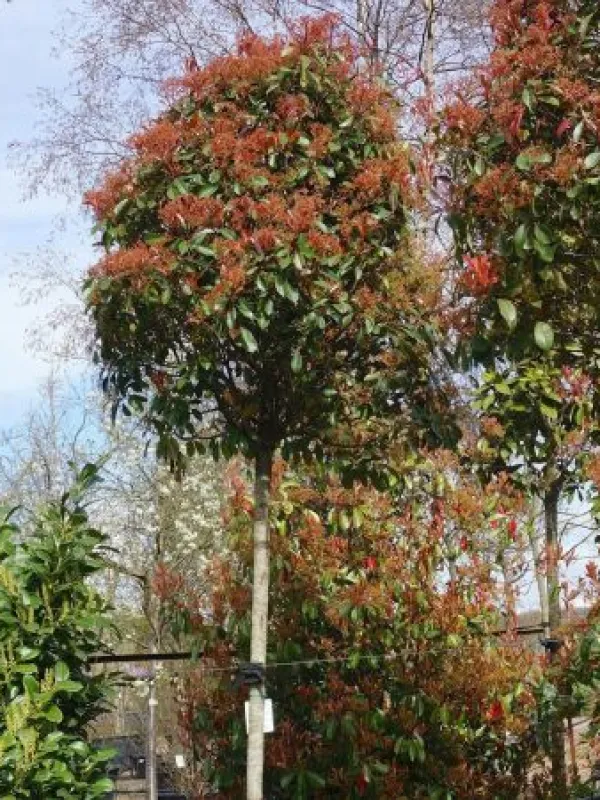
The plant is widely recognized for its spectacular foliage. New growth typically emerges in a brilliant red or coppery color, creating a striking visual contrast against the mature dark green leathery leaves.
This species thrives best in temperate climates with full sunlight. Adequate sunlight is essential for the plant to maintain its signature vibrant red color on the new shoots during the growing season.
Regarding soil, it requires well-draining, fertile, and slightly acidic conditions. It is intolerant of waterlogged soils, as excessive moisture often leads to root rot and other physiological disorders.
Regular maintenance includes pruning, which is usually performed after the plant finishes flowering. This encourages dense, bushy growth and keeps the shrub looking neat and attractive throughout the year.
Main diseases and pests
The most significant disease affecting Fraser photinia is leaf spot, caused by the fungus Entomosporium mespili. It appears as small, reddish-brown spots on the leaves, leading to leaf drop.
Management of leaf spot relies on proper cultural practices such as ensuring good air circulation between plants and avoiding overhead irrigation. If infection occurs, fungicides containing copper or other active ingredients should be used.
Pests such as aphids and scale insects are common adversaries. They usually target young, succulent shoots, weakening the plant and sometimes causing stunted or distorted foliage development.
Monitoring the undersides of leaves and the stems is crucial for early detection of pest infestations. Timely application of insecticidal soaps or horticultural oils can manage populations before they explode.
Providing optimal growing conditions, including proper fertilization and adequate spacing, significantly enhances the shrub's natural resistance to both pathogens and insect pests.