
Korean meadowsweet
Filipendula multijuga Maxim.
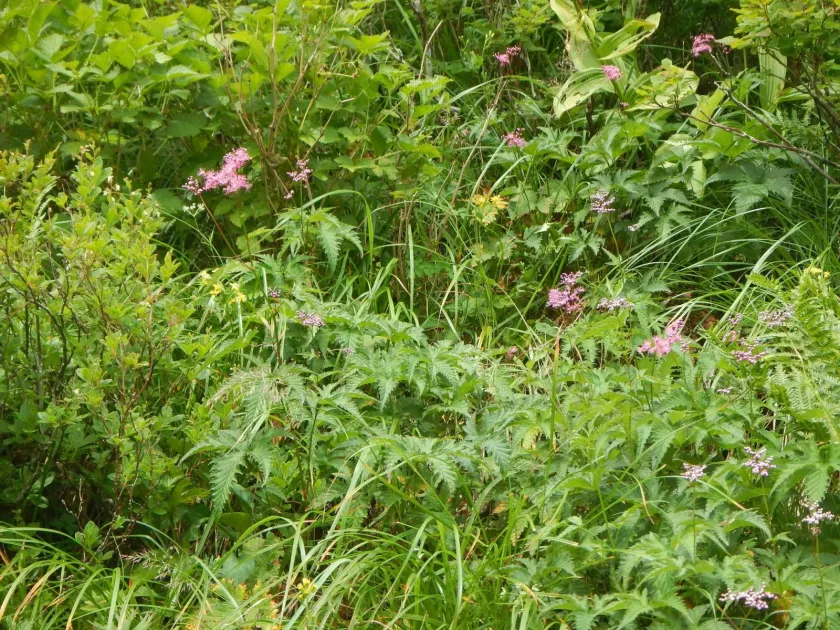
Description
Growing requirements
Korean meadowsweet (Filipendula multijuga) is a herbaceous perennial plant belonging to the Rosaceae family. It is native to the Far East, specifically regions of Japan and the Korean Peninsula, where it typically inhabits moist meadows and woodland fringes.
The plant thrives in nutrient-rich, moist soils that have good drainage capacity. It requires consistently damp soil conditions to support its rapid growth during the spring and early summer seasons, making it ideal for low-lying areas in a field or garden setting.
Regarding climatic preferences, this species is highly cold-hardy, capable of withstanding harsh winter temperatures. It performs best in full sun, but it can tolerate partial shade, especially in warmer climates where protection from the intensity of the midday sun is necessary to prevent leaf scorch.
Agrotechnical management involves regular moisture monitoring and soil enrichment. Applying organic matter, such as well-rotted compost, ensures the plant receives the essential micronutrients required for robust flowering and healthy foliage development throughout the season.
The primary economic uses of Korean meadowsweet are found in ornamental horticulture and the pharmaceutical industry. Its attractive inflorescences make it a popular choice for perennial borders, while its chemical composition allows for utilization in natural medicinal preparations.
Main diseases and pests
Common pests affecting Filipendula multijuga include aphids and spider mites, which can cause significant damage to the plant's aesthetic value. Early intervention with suitable insecticidal soaps or biological control agents is recommended to prevent large-scale infestations.
The most common fungal disease is powdery mildew, particularly in environments with poor air circulation. To manage this, gardeners should ensure adequate spacing between plants and avoid overhead watering in the late afternoon to keep the foliage dry overnight.