
Saskatoon berry
Amelanchier alnifolia (Nutt.) Nutt. ex M. Roem.
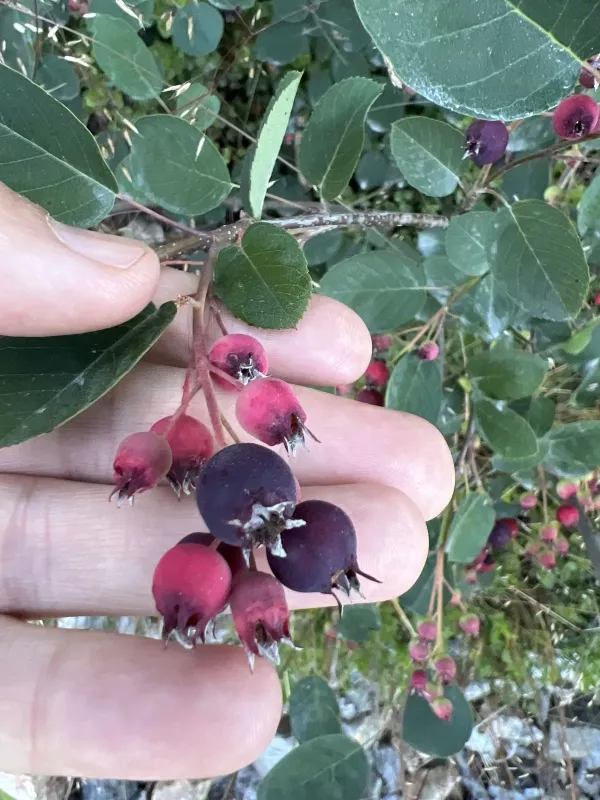
Description
Sowing dates
Saskatoon berry (Amelanchier alnifolia) is a deciduous shrub native to North America, belonging to the Rosaceae family. Propagation is commonly achieved through suckers, softwood cuttings, or tissue culture, as seeds may show variability in fruit quality and take longer to establish.
The best time to plant Saskatoon berry is early spring or late autumn when the plants are dormant. Preparing the soil with organic matter before planting helps in establishing a strong root system, which is crucial for the long-term productivity of the shrubs.
When establishing a plantation, spacing is vital for air circulation and mechanical maintenance. Rows should be set at 3 to 4 meters apart, with 1 to 2 meters between individual plants, allowing the bushes to spread naturally while maintaining enough space for harvesting.
If planting from seeds, cold stratification is required to break dormancy. Seeds should be sown in autumn to allow for natural winter chilling, ensuring a successful germination rate when temperatures rise in the following spring season.
Care should be taken when selecting the planting site to ensure it is free from aggressive perennial weeds. Initial weed control during the first two seasons is essential to ensure that the young shrubs are not outcompeted for nutrients and water.
Growing requirements
Saskatoon berries are exceptionally cold-hardy, surviving temperatures as low as -40°C. They thrive in full sun, which is necessary for sugar accumulation in the berries and for reducing the risk of fungal diseases associated with damp, shaded environments.
The ideal soil is well-drained, sandy loam or loam with a pH between 6.0 and 7.5. While the plant is adaptable to various soil types, it performs poorly in heavy clay or waterlogged soils, which can cause root rot and significantly limit growth.
Water requirements are moderate, but consistent moisture is critical during fruit set and development. Drip irrigation systems are highly recommended for commercial orchards to deliver water directly to the root zone and optimize growth and berry size.
Nutrient management involves regular soil testing. Nitrogen should be applied in early spring to support vegetative growth, while potassium and phosphorus are essential for root health and cold hardening in preparation for the winter months.
Pruning is a fundamental aspect of care. Removing old stems that are over 7 years old encourages the growth of young, highly productive shoots. A well-managed bush should have a mix of canes of different ages to ensure a stable annual harvest.
Yield
The crop is known for its precocity, with plants typically producing their first fruit 3 to 4 years after planting. Full production capacity is generally reached by the 6th or 7th year, making it a reliable choice for commercial growers.
An average mature bush can yield between 5 and 10 kilograms of fruit per season, depending on the variety and local climate. High-yielding cultivars, if managed with proper irrigation and fertilization, can produce even higher volumes.
Saskatoon berries are highly valued for their nutritional profile, being rich in antioxidants, fiber, and essential minerals. They are marketed both as fresh produce and as a premium ingredient for jams, pie fillings, and specialized baked goods.
Pollination is a key factor in yield. Although Saskatoon berries are self-fertile, cross-pollination between different cultivars can significantly increase fruit set and overall berry size, leading to a more consistent crop throughout the plantation.
Regular maintenance of the plantation, including timely suckering and thinning, helps maintain the health of the plants. Neglected bushes tend to become overcrowded, which leads to smaller fruit sizes and more difficult harvesting conditions.
Main diseases and pests
The most common pest is the Saskatoon sawfly, which can cause significant damage to the berries if not monitored. Integrated pest management, including the use of targeted biological sprays, is effective in reducing populations.
Entomosporium leaf and berry spot is a prevalent fungal disease that causes premature leaf drop and spots on the fruit. Improving airflow through proper pruning and planting spacing is the primary preventative measure against this pathogen.
Birds are the most significant challenge during the ripening stage, often consuming a large portion of the crop. Bird netting is the most effective commercial solution to protect the berries until they reach full maturity.
Aphids can infest new growth, especially in the spring, potentially stunting the development of the shoot tips. Monitoring and using insecticidal soaps early in the infestation stage can keep aphid numbers below economic thresholds.
Monitoring for powdery mildew is also necessary in humid areas. Using fungicides specifically approved for fruit crops can manage outbreaks, but prevention through proper site selection and canopy management remains the most sustainable approach.
Harvesting
Harvesting usually occurs in mid-to-late summer. Because berries do not ripen all at once, growers may need to harvest the same bush multiple times to ensure the berries are at their peak sweetness and flavor profile.
Hand-harvesting is standard for high-quality fresh market fruit, as it prevents bruising. For industrial-scale processing, mechanical harvesting equipment designed for smaller berries can be used, provided the plantation design allows for it.
Post-harvest handling is critical for maintaining quality. Berries should be cooled immediately after picking to remove field heat, which significantly extends their shelf life and preserves their appearance for the market.
Freshly harvested fruit has a relatively short shelf life at room temperature, but it can be stored for up to a week in cold storage at 0–2°C. Controlled atmosphere storage is used by some large-scale operations to extend availability.
The berries are excellent for processing, including freezing or drying. These methods allow producers to sell their product throughout the year, adding value and reducing the volatility associated with fresh market seasonal cycles.