
Smooth serviceberry
Amelanchier laevis Wiegand
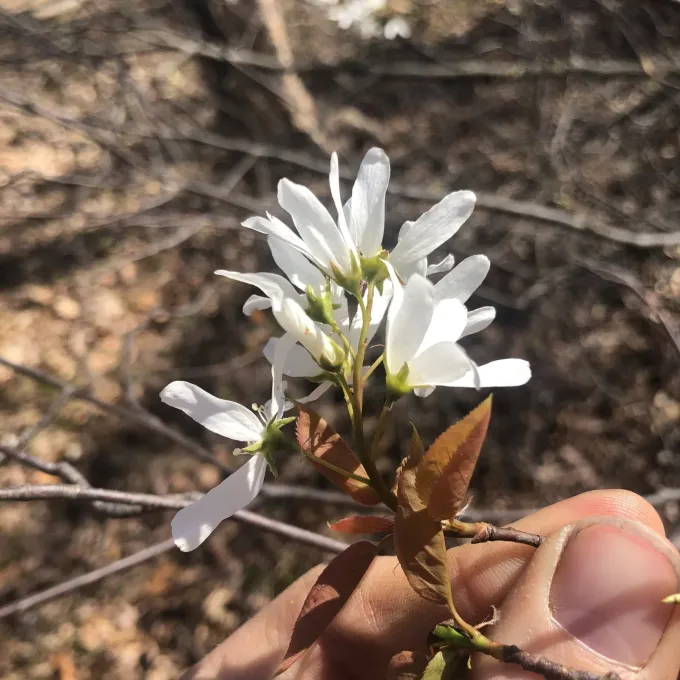
Description
Sowing dates
Seeds of Amelanchier laevis should ideally be sown in the autumn to allow for natural cold stratification over the winter, which is essential for uniform germination.
If seeds are stored dry, they must undergo artificial stratification in a cold environment at temperatures near freezing for at least three to four months before spring planting.
When propagating via nursery-grown saplings, containerized plants can be installed in the landscape throughout the growing season, provided they receive sufficient moisture.
Proper site spacing is crucial, with at least 3-4 meters between individual plants to accommodate the shrub's natural spreading growth habit as it reaches maturity.
Preparing the planting hole involves incorporating organic compost and slow-release fertilizers to ensure strong root development during the initial establishment phase.
Growing requirements
Smooth serviceberry belongs to the Rosaceae family and is recognized for its exceptional hardiness, capable of thriving in diverse climate zones including harsh northern regions.
The species performs best in full sun but maintains good vigor in partial shade, making it a versatile choice for various locations within a productive garden landscape.
It prefers well-drained, slightly acidic to neutral soil types and is generally intolerant of prolonged waterlogging, which can cause root-related stress to the shrub.
Routine care involves moderate irrigation during peak summer drought and applying organic mulch to help retain soil moisture and suppress competitive weed growth around the base.
Periodic structural pruning is recommended to maintain an open canopy structure, which ensures sufficient light penetration and airflow to support healthy branch development.
Yield
Amelanchier laevis begins to produce a reliable harvest typically starting from the third or fourth year after planting, with productivity increasing as the shrub matures.
The berries ripen in clusters, displaying a deep purple-black hue when fully mature, and possess a sweet, mild flavor profile highly prized for culinary applications.
Mature, healthy specimens can produce a yield of 5-8 kilograms of fruit per season, depending on the site conditions, moisture availability, and overall plant health.
The fruit is nutritionally dense, containing significant levels of antioxidants, dietary fiber, and vitamins, which contribute to its status as a valuable health-promoting superfood.
Common uses for the harvest include fresh consumption, various baked goods, jams, jellies, and drying processes that preserve the fruit for long-term storage and use.
Main diseases and pests
Powdery mildew is a significant concern for serviceberry when grown in humid environments, often appearing on the foliage if the canopy density is too high.
Insect pests, including various aphids and leaf miners, may occasionally affect the health of the plant, necessitating regular visual inspections during the active growing season.
Maintaining clear airflow by thinning interior branches is the primary cultural control method to minimize the risk of fungal outbreaks within the plant structure.
Birds are notorious for targeting the ripening berries, and growers often use protective netting if they wish to secure the majority of their crop for harvest.
Integrated pest management strategies focusing on early detection and organic horticultural oils can effectively manage pest pressure without harming beneficial insects.
Harvesting
Harvesting should be done in multiple passes, selecting only the darkest, fully ripened berries to ensure the best sweetness and quality for culinary processing.
Picking is best conducted during dry morning hours once the dew has evaporated, which helps improve the post-harvest shelf life and reduces the risk of rapid spoilage.
Gentle handling is critical during the harvest to prevent crushing the delicate skins, which would otherwise release juices and encourage premature fermentation of the batch.
Since the fruit is perishable, it should be processed or refrigerated immediately to maintain the nutritional integrity and flavor characteristics of the freshly picked harvest.
Using shallow, ventilated crates for collection is the preferred method to prevent stacking weight from damaging the bottom layers of the harvested berries during transport.