
Snowy mespilus
Amelanchier ovalis Medik.
Description
Growing requirements
The snowy mespilus (Amelanchier ovalis Medik.) is a deciduous shrub belonging to the Rosaceae family. It is native to the mountainous regions of Southern and Central Europe, where it thrives in rocky, calcareous soils.
This plant is characterized by its excellent winter hardiness and its ability to withstand significant temperature fluctuations. It prefers full sun but can tolerate partial shade while maintaining its ornamental appeal.
The snowy mespilus is not highly demanding regarding soil quality. It develops best in well-drained, light loamy soils with a neutral or slightly acidic pH level. Waterlogged conditions should be strictly avoided.
With its deep and robust root system, the shrub exhibits great drought tolerance once established. This makes it a perfect candidate for slope stabilization and protective hedgerows in various landscapes.
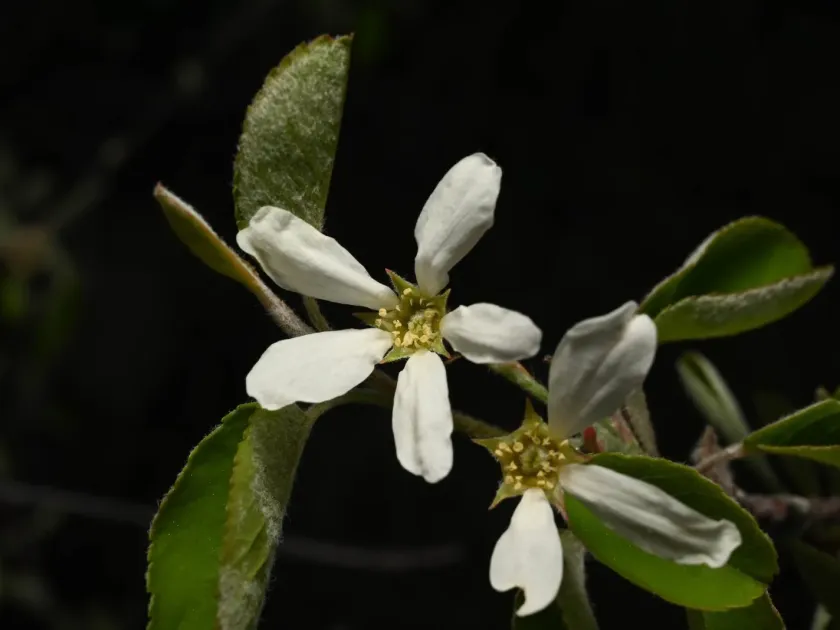
Biologically, it is a slow-growing species during its early years. An adult shrub can reach a height of three to four meters, characterized by a dense, spreading crown with oval-shaped leaves that feature a subtle downy underside.
Yield
The snowy mespilus is primarily valued for its delicious, nutrient-rich berries. The fruit is packed with antioxidants, vitamins, and minerals, making it a valuable addition to a healthy diet.
Fruit production typically commences within three to four years after planting. Stable yields are usually achieved once the plant reaches seven to ten years of age, provided it receives proper care and maintenance.
Berries ripen unevenly, which necessitates multiple picking sessions throughout the harvesting season. The fruit is highly versatile and can be used for jams, jellies, juices, or dried as a healthy snack.
Beyond its culinary value, the shrub is prized for its ornamental beauty. During spring, it produces an abundance of white, star-shaped flowers that attract essential pollinators like bees and butterflies.
Its resilience makes the snowy mespilus a reliable crop in regions with unpredictable weather. It provides consistent results where more delicate berry species might struggle to thrive or survive harsh winters.
Main diseases and pests
The snowy mespilus is generally resistant to most pests and diseases common to the Rosaceae family. However, under conditions of poor ventilation or high humidity, powdery mildew may occur.
Maintaining proper air circulation through regular pruning is the most effective way to prevent fungal infections. Ensuring the shrub is not overcrowded is essential for its overall health.
Occasionally, aphids or leaf-eating insects may appear during the growing season. Integrated pest management, involving monitoring and timely intervention, is usually sufficient to control these minor issues.
Birds are the primary threat to the crop, as they are highly attracted to the sweet, ripening berries. Growers often utilize bird netting or protective covers to ensure a successful harvest.
Systematic sanitary pruning, which involves the removal of dead or crossing branches, helps to keep the plant vigorous and reduces the likelihood of pests finding a suitable environment to inhabit.
Harvesting
Harvesting should be performed selectively as the berries turn a deep blue or black color with a powdery bloom. It is crucial to wait until they are fully ripe to ensure the best sugar content and flavor.
Since the berries can drop if left on the branches too long, frequent harvesting is recommended. It is best to gather the fruit in dry weather to optimize shelf life and quality.
Because the fruit has a delicate skin, care must be taken during the harvest process to avoid bruising. Damaged berries should be processed quickly, as they have a short shelf life after being picked.
If fresh consumption is not immediate, the berries should be frozen or dried to preserve their nutritional integrity and flavor for later use in cooking or baking.
For home gardens, the manageable size of the shrub makes manual harvesting very convenient. It does not require complex machinery, allowing for easy access to all parts of the plant during the picking process.