
Calligonum aphyllum
Calligonum aphyllum (Pall.) Gürke
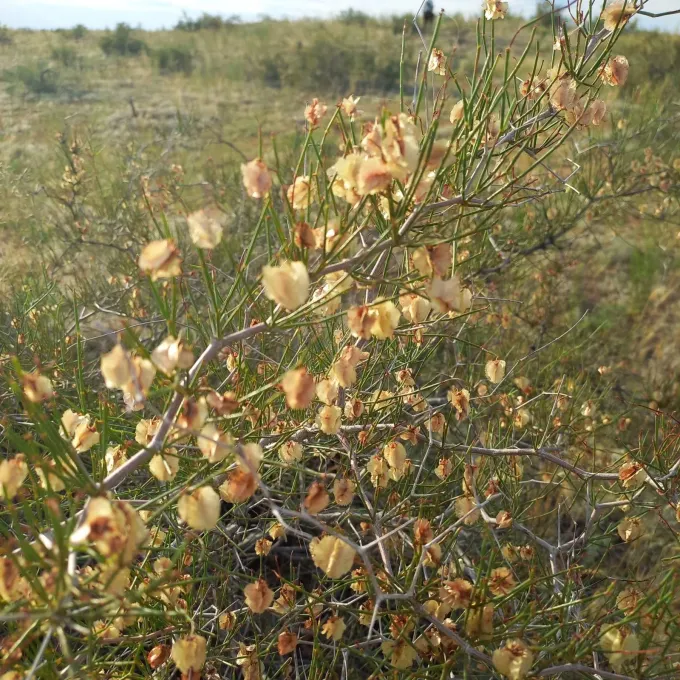
Description
Sowing dates
Sowing of Calligonum aphyllum seeds is typically carried out during the late autumn or winter months to coincide with the natural precipitation cycle.
The seeds are sown at a depth of approximately 5 centimeters in sandy substrates, which allows them to retain moisture while remaining accessible to the emerging rootlets.
For large-scale desert stabilization projects, seed broadcasting or pocket-sowing techniques are employed to ensure uniform distribution across wind-prone dunes.
Artificial irrigation is rarely used due to the remote location of planting sites, thus timing the sowing to the dormant season is essential for success.
Germination success is heavily dependent on soil temperature; therefore, local soil conditions are monitored to ensure the ground has cooled sufficiently before sowing.
Growing requirements
Calligonum aphyllum is a prominent member of the Polygonaceae family, well-adapted to the harsh environments of Central Asian deserts and steppes.
The plant functions as a primary sand-binder, featuring a deep taproot system that can reach extensive depths to sustain the plant during extreme heat waves.
Its botanical structure includes green assimilating twigs instead of traditional leaves, which drastically minimizes transpiration losses in low-humidity environments.
Optimal growth is observed in loose, sandy, or semi-consolidated soils, where the plant thrives under direct sunlight and can withstand significant salinity.
The species demonstrates remarkable frost tolerance, allowing it to survive the severe temperature fluctuations characteristic of continental desert climates.
Main diseases and pests
Locust swarms are considered the primary biological threat to Calligonum aphyllum, as they can quickly defoliate large stands of this essential desert shrub.
Small mammals, particularly gerbils and desert rodents, frequently burrow near the roots, compromising the stability of young plants and causing structural damage.
Various fungal pathogens can affect the twigs and branches if local humidity levels rise unexpectedly for prolonged periods during the growing season.
- Wood-boring insects targeting aged stems and trunks.
- Defoliating caterpillars that reduce the plant's photosynthetic capacity.
- Root rot diseases occurring in areas with poor drainage and excessive moisture.
Integrated pest management strategies are often difficult to implement in desert environments, focusing instead on selecting resilient local genotypes for restoration.