
Mongolian calligonum
Calligonum mongolicum Turcz.
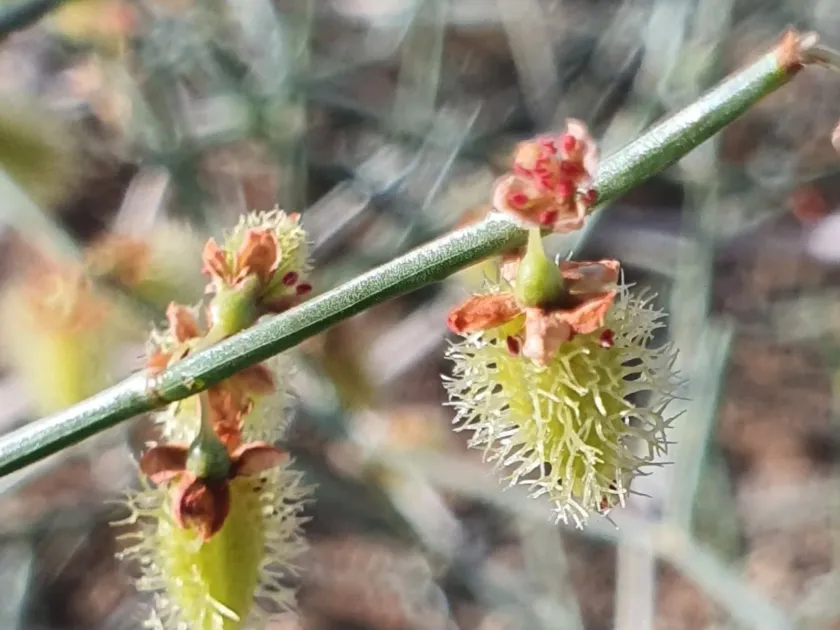
Description
Sowing dates
Sowing should be performed during the optimal seasons, typically late autumn or very early spring to take advantage of soil moisture. Proper placement of seeds is crucial in sandy soils to ensure they are not displaced by wind action.
Seedbed preparation often involves creating shallow trenches or using specialized seeding equipment designed for desert landscapes. This ensures that the seeds are covered with a sufficient layer of sand to facilitate successful germination.
Growing requirements
Mongolian calligonum (Calligonum mongolicum Turcz.) is a highly branched shrub belonging to the Polygonaceae family. It is a specialized psammophyte adapted to survive in the harshest desert environments of Central Asia.
Its natural habitat includes the arid regions of Mongolia and China, where it plays a critical role in stabilizing shifting sand dunes. The plant thrives in environments characterized by extreme heat, high winds, and minimal precipitation.
The botanical structure of this shrub is remarkable for its deep and extensive root system. This allows the plant to anchor itself in unstable sandy soil while reaching deep underground water sources that are inaccessible to other species.
The plant requires full sun exposure and well-drained sandy substrates to thrive. It is exceptionally tolerant of soil salinity and high temperatures, making it a valuable species for ecological restoration in desert regions.
From an agricultural standpoint, Mongolian calligonum is primarily used for land reclamation and soil conservation. In some pastoral regions, it serves as a source of drought-resistant fodder for camels and small ruminants during the spring.
Main diseases and pests
Mongolian calligonum is naturally resilient to many common agricultural pests and diseases. Its tough physical structure and specific chemical composition act as a natural deterrent against most insects and pathogens found in desert ecosystems.
The main threat to population health is anthropogenic, specifically overgrazing and land mismanagement. Sustainable management practices are essential to prevent the degradation of these shrublands and to maintain their long-term viability in desert climates.