
Upright paspalum
Paspalum virgatum
Description
Growing requirements
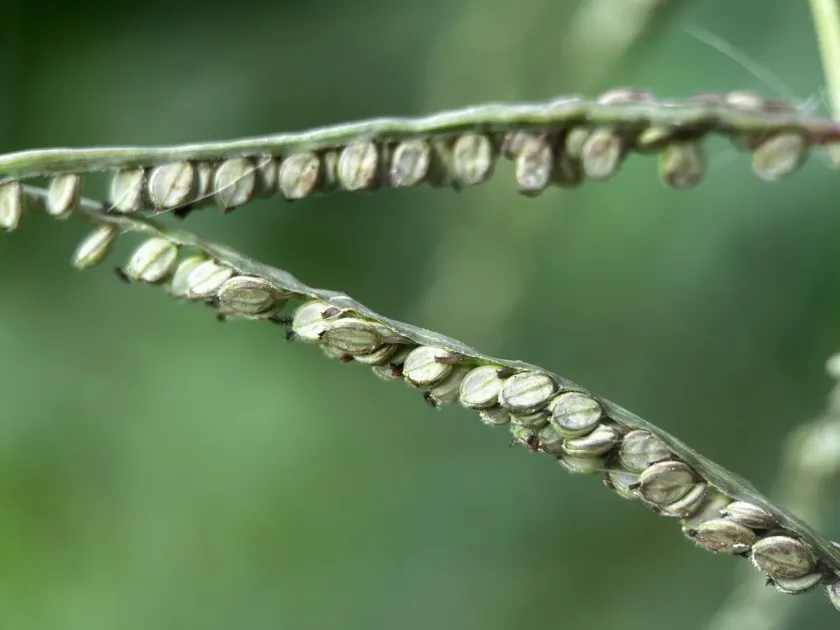
Upright paspalum (Paspalum virgatum) is a robust perennial grass species belonging to the Poaceae family. Known for its tall, erect growth habit, this plant can reach significant heights, often forming large clumps that are characteristic of tropical and subtropical ecosystems.
The plant originates from the Americas, primarily inhabiting moist environments such as savannahs and wetlands. Its natural ability to thrive in waterlogged soil makes it a valuable species for managing low-lying areas that are unsuitable for many other traditional agricultural crops.
Regarding soil requirements, the species shows a preference for moist to wet soil conditions. It is remarkably tolerant of acidic soil types, which are common in its native range, and while it can survive in nutrient-poor conditions, fertilizer application significantly boosts dry matter yields.
Climate adaptability is strictly limited to warm regions, as the plant lacks frost tolerance. It requires high solar radiation and stable tropical temperatures to complete its growth cycle, making it an excellent candidate for summer-season forage production in specific geographic latitudes.
Agronomic management involves controlling the vegetation density to ensure optimal regrowth. Regular maintenance of the pasture, including managed grazing or scheduled mowing, is necessary to keep the grass in a vegetative state, preventing it from becoming too fibrous and unpalatable for livestock.
Yield
The primary agricultural use of Upright paspalum is as fodder for ruminants, either as direct grazing or processed into hay. While its nutritive value is moderate, its high potential for biomass production provides a reliable food source for cattle in regions where other grasses fail to thrive.
Main diseases and pests
Key threats to this crop include various fungal leaf spots that flourish under high humidity levels. Insect pests, such as grasshoppers and specific types of aphids, can impact plant vigor; therefore, monitoring for signs of infestation is critical for maintaining healthy and productive stands.