
Sea oats
Uniola paniculata L.
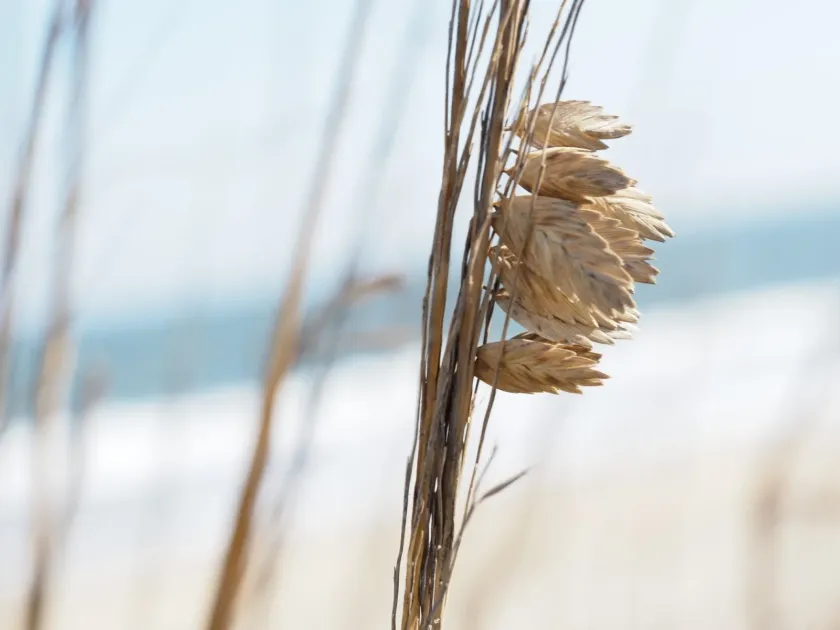
Description
Growing requirements
Sea oats (Uniola paniculata) is a perennial grass species belonging to the Poaceae family. It is recognized as the most important primary dune builder throughout its natural range in the coastal areas of the southeastern United States.
The plant is anatomically adapted to survive in harsh coastal environments. Its extensive root system provides structural integrity to sand dunes, while its rigid leaves effectively withstand high-velocity winds and salt spray.
Uniola paniculata requires well-drained, sandy soils with low nutrient content. It is a heliophilous species, meaning it requires full sun exposure to thrive and effectively colonize new dune formations through its rhizome network.
The plant exhibits high drought tolerance, which is critical for its survival in arid sandy environments. It is not traditionally cultivated for food or fodder, but its ecological value makes it a key component in environmental restoration projects.
For conservation and dune restoration purposes, sea oats are often transplanted as established plants or grown from specialized seed mixtures. Proper site preparation ensures that the roots can penetrate deeply, stabilizing the dune against tidal erosion.
Main diseases and pests
Anthropogenic activities pose the greatest threat to sea oats populations. Pedestrian traffic and off-road vehicles physically destroy the plant's delicate stems and fragment the rhizome network, leading to rapid dune erosion.
Invasive plant species can outcompete sea oats in disturbed areas. These invaders can alter the soil composition and prevent the natural succession required for the stabilization of primary dunes, threatening the structural integrity of the coastline.
Pathogenic fungi and various insect species can infect the foliage or target the reproductive structures. While these are usually balanced within a healthy ecosystem, they can cause significant damage in areas stressed by extreme weather or habitat fragmentation.
Changes in global climate and sea levels increase the risk of salt-water inundation, which, if persistent, can exceed the physiological threshold of the plant. This leads to reduced vigor and increased susceptibility to secondary infections.
Management strategies focus on protecting existing stands and replanting degraded areas. Utilizing protective fencing and designated walkovers is standard practice to mitigate the negative impact of human activity on the long-term survival of the species.