
Tetrapogon villosus
Tetrapogon villosus
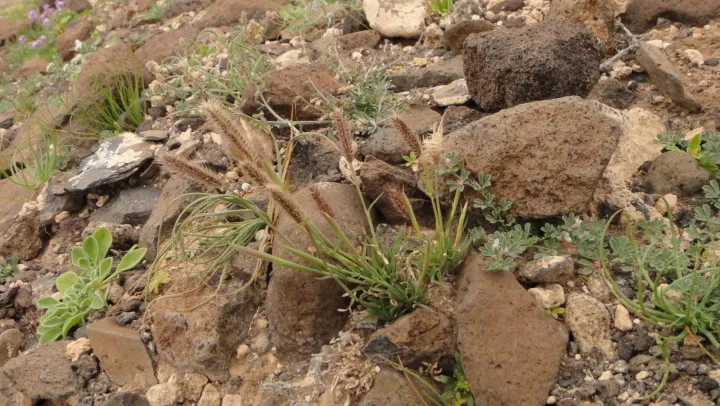
Description
Growing requirements
Tetrapogon villosus is a perennial grass species belonging to the Poaceae family. This plant has evolved to thrive in harsh, arid environments, making it a critical asset for soil conservation and the restoration of degraded landscapes in desert regions.
The native range of this species covers vast areas across North Africa, the Middle East, and parts of Southern Asia. It prefers sandy, rocky, or gravelly soils and is exceptionally tolerant of high salinity and nutrient-poor substrates, where many other forage plants fail.
The culture is noted for its extreme heat resistance and an impressive ability to withstand prolonged drought. During intense heat, the plant metabolism slows down to conserve moisture, allowing it to remain viable even in the most severe climatic conditions of the desert.
Botanically, Tetrapogon villosus grows in low, dense tufts, which helps bind the soil and provides a vital defense against wind erosion. Its leaves are typically tough and grey-green, covered in fine hairs that minimize transpiration and protect the plant from harsh sunlight.
The primary agricultural use of this grass is as fodder for livestock, particularly camels, sheep, and goats. While it may appear coarse, it provides essential nutritional support during the growing season in areas where no other vegetation is available for grazing.
Main diseases and pests
There are no significant records of specific widespread diseases for Tetrapogon villosus in its natural habitat. The extreme dryness and high temperatures of the desert ecosystems effectively inhibit the proliferation of most plant pathogens.
The main biological threat to this species comes from locust swarms, which are indigenous to the arid regions where the grass grows. In peak seasons, these insects can cause significant damage to the biomass, limiting the availability of fodder for domestic livestock.
Fungal infections, such as rusts, may occasionally appear if an area experiences uncharacteristically high humidity or rainfall. Proper airflow within the grass canopy is usually sufficient to prevent the development of these fungal issues under normal desert conditions.
Root rot represents a rare risk, occurring only if the soil suffers from waterlogging or poor drainage. Given that the plant is adapted to well-drained sandy soils, any disruption to soil permeability can lead to rapid root decay and plant mortality.
To ensure the health of pastures dominated by this species, it is essential to avoid overgrazing. Implementing a rotational grazing system allows the plant to recover and store carbohydrates in its root system, ensuring its long-term survival and productivity.