
Scleropogon brevifolius
Scleropogon brevifolius
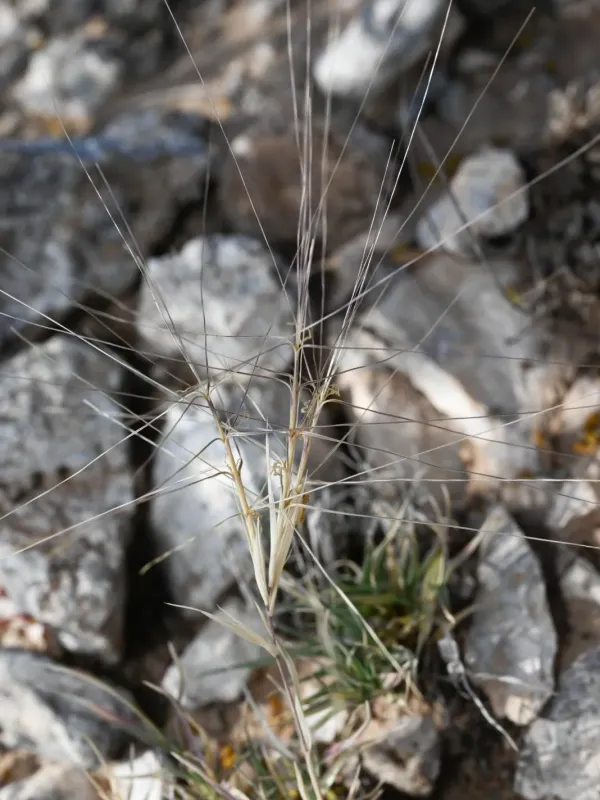
Description
Growing requirements
Scleropogon brevifolius, commonly known as burrograss, is a hardy perennial grass species belonging to the Poaceae family. It typically forms low-growing, dense mats or patches, making it an excellent candidate for ground stabilization in arid environments.
This grass is native to the southwestern United States and northern Mexico, areas characterized by severe drought conditions. Its evolutionary history has made it highly specialized for life in harsh semi-arid desert grasslands.
Regarding environmental requirements, the plant demands well-drained soils, often thriving in rocky, gravelly, or sandy textures. It possesses a high tolerance for alkaline soils, which are common in its native desert range.
Botanically, Scleropogon brevifolius is distinguished by its stoloniferous growth pattern, which allows for rapid vegetative spreading. This trait is essential for its survival and success in colonizing disturbed or sparse landscapes.
In agricultural and conservation contexts, it is primarily used for rangeland restoration. Its ability to survive with minimal rainfall makes it a vital component for maintaining the ecological balance of grazing areas.
Main diseases and pests
Overgrazing stands out as the primary threat to burrograss populations. Continuous pressure from livestock diminishes the plant's ability to store carbohydrates in its root system, often leading to total stand depletion.
Insect pests, specifically grasshoppers, can cause significant defoliation during outbreaks. Because the plant grows in open areas, it is highly accessible to these migratory herbivores during the growing season.
While the species is naturally resistant to many diseases due to its arid habitat, root rot can occur if soil drainage is compromised by unnatural water retention or flooding events.
Habitat conversion remains a major long-term threat. As lands are repurposed for agricultural development or infrastructure, the native stands of this hardy grass face fragmentation and eventual loss.
Invasive weed species that compete for limited water resources also pose a challenge to established stands. When competition intensity increases, Scleropogon brevifolius may struggle to maintain its presence in the native range.