
Sea barley
Hordeum marinum
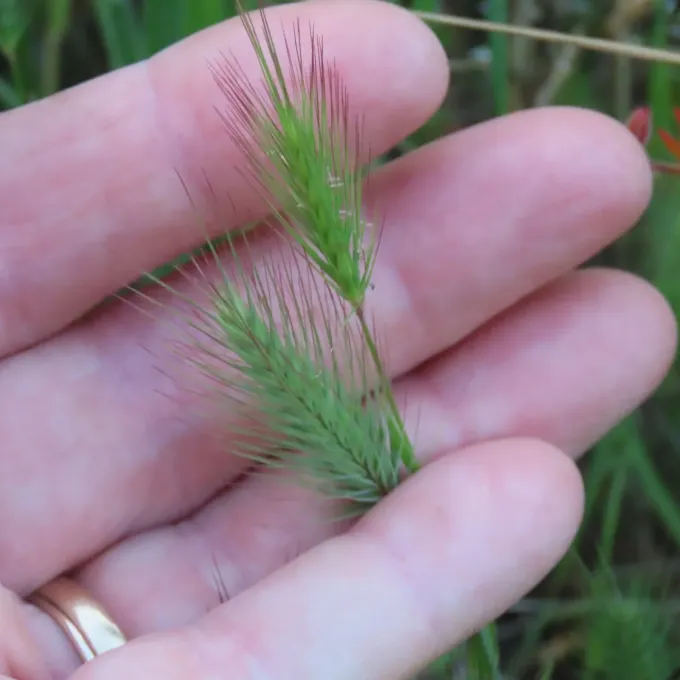
Description
Growing requirements
Sea barley (Hordeum marinum) is an annual herbaceous plant belonging to the Poaceae family. It is a recognized halophyte, meaning it is highly adapted to soils with elevated salt concentrations that would prove toxic to most conventional crops.
The plant is native to the coastal regions of Europe, the Mediterranean, and parts of Asia. It is typically found in saline marshes and seaside meadows, playing a vital role in local ecosystems by stabilizing fragile soil structures against erosion.
Botanically, it is characterized by its short, dense stature, glaucous leaves, and narrow, bristly flower spikes. These adaptations allow the plant to minimize water loss through transpiration while thriving in environments exposed to drying salt-laden winds.
Regarding cultivation requirements, sea barley demands full sun and well-drained, saline soils. It is remarkably indifferent to high salinity levels that inhibit the growth of standard cereal varieties, making it a unique subject for saline agriculture research.
In terms of agricultural utility, while not a commercial grain crop, its potential lies in soil remediation and biodiversity restoration. It is often investigated for its ability to extract salts from contaminated fields, preparing them for future reclamation.
Main diseases and pests
The primary threat to sea barley populations is habitat loss due to coastal development and land use changes. When coastal marshes are drained or converted, the specific niche required for this species disappears rapidly.
Diseases such as fungal rusts and powdery mildew are prevalent when weather conditions become unusually humid. These pathogens target the leaves, potentially reducing the plant's overall vigor and its ability to compete in its niche.
Insect pests including aphids and various stalk borers can pose a threat, particularly in early developmental stages. These pests may weaken the stems, making the plants more susceptible to lodging during coastal storms.
Competition with invasive plant species is a persistent issue in areas where salinity levels are fluctuating. As salt concentrations drop, non-halophytic species may encroach upon the territory, outcompeting the sea barley for resources.
Environmental pollution, specifically the runoff of pesticides and herbicides from nearby conventional farms, can severely affect the health of these plants. Sea barley, being sensitive to certain synthetic chemicals, acts as a barometer for regional environmental health.