
Hard grass
Sclerochloa dura
Description
Growing requirements
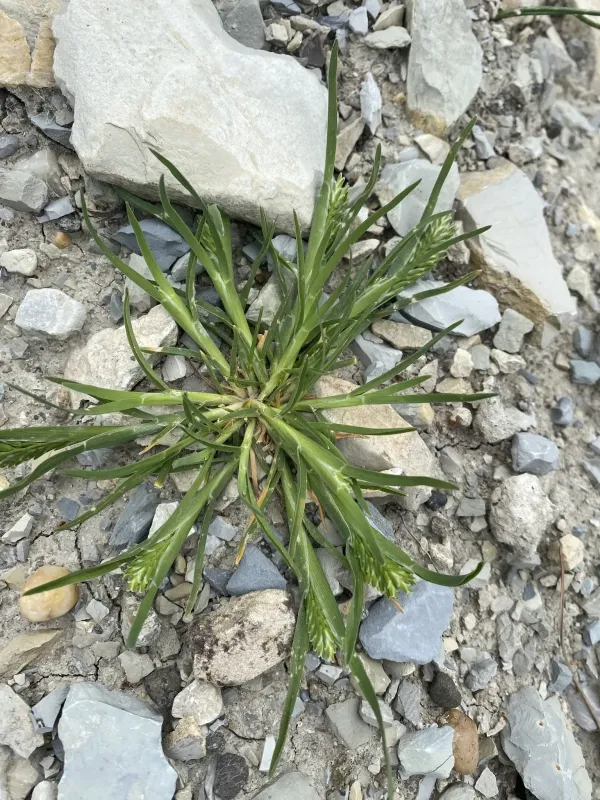
Hard grass (Sclerochloa dura) is an annual grass species belonging to the Poaceae family. It is widely recognized for its remarkable ability to thrive in highly compacted and disturbed soils where most other vegetation fails to establish.
The plant is typically found in habitats subjected to heavy grazing pressure, such as pastures, farmyards, and roadsides. Its unique biological adaptation allows it to withstand intense trampling by livestock without suffering significant structural damage.
Regarding climate requirements, this species favors temperate regions with moderate moisture availability during the early spring. It is highly responsive to solar radiation and requires open, unshaded areas to complete its life cycle effectively.
The soil preference for Sclerochloa dura is quite broad. While it prefers neutral to slightly alkaline soils, it is the physical condition of the soil, rather than its chemical composition, that dictates its distribution. It excels in compacted clay and loam soils.
Agrotechnical management is rarely required due to the plant's opportunistic growth strategy. It serves as an excellent ground cover in areas prone to erosion, providing a protective layer that stabilizes the soil surface effectively.
Yield
The primary agricultural utility of hard grass is its role as a forage component in grazing systems. Although it does not produce high yields of biomass, its nutritional profile is suitable for livestock, especially in the early stages of its development.
Due to its low-growing habit, hard grass is strictly a grazing resource rather than a hay crop. Its resilience under heavy grazing pressure makes it a reliable source of green matter in pastures where more sensitive grasses have been depleted.
Productivity is highest in early spring. As the plant enters the reproductive phase, its quality decreases, so optimal grazing management should coincide with its vegetative growth phase to maximize nutrient intake for animals.
Improving the yield potential involves managing the intensity of grazing. Over-grazing during the seed-ripening phase can reduce the density of the next season's population, as the species relies on prolific seed production for regeneration.
In mixed pasture systems, hard grass is often considered a secondary component. It occupies a specialized niche, filling gaps in the vegetation that prevent bare soil and invasive weed expansion during periods of drought or intense land use.
Main diseases and pests
Sclerochloa dura is known for its high level of resistance to common cereal diseases. It is rarely impacted by rusts or blights, partly due to its short life cycle and its preference for well-drained, compacted environments.
Insect pests such as cereal flies may occasionally feed on the plant, but these occurrences do not typically lead to significant economic loss. The species' ability to produce large quantities of seed ensures long-term population stability.
The main threat to hard grass is competition from taller, perennial grass species or invasive weeds. If a pasture is left ungrazed for long periods, hard grass is usually quickly outcompeted for sunlight and soil resources.
Root pathogens are largely absent in the compacted soils that this grass prefers. Waterlogging, however, can weaken the plant, making it more susceptible to opportunistic fungal infections, which is why it favors drier, firmer ground.
Effective management against threats involves maintaining a balanced grazing schedule. This prevents the dominance of tall weeds and ensures that the low-growing hard grass receives the light and space it needs to thrive.