
Schismus arabicus
Schismus arabicus
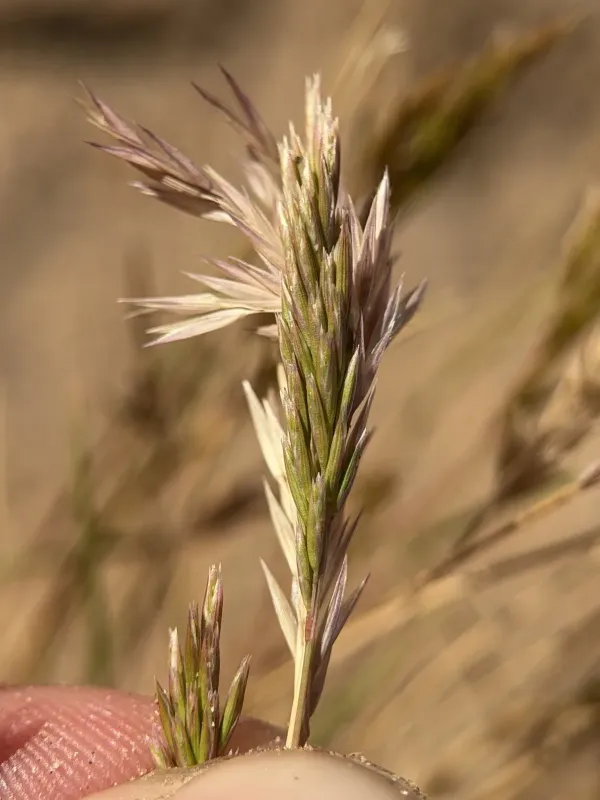
Description
Sowing dates
Schismus arabicus is an ephemeral species that relies on seasonal rainfall for germination. In its native habitat, sowing naturally occurs as temperatures drop and moisture becomes available in late autumn, ensuring the plant establishes before the harsh summer drought.
In agricultural settings, overseeding on degraded rangelands should be timed with the onset of the rainy season. Minimal soil disturbance is recommended to preserve the soil crust and existing seed bank, allowing the seeds to germinate under natural conditions.
The seeds are minute and should be sown at a very shallow depth. Surface broadcasting followed by light rolling is the most effective technique to ensure sufficient seed-to-soil contact while preventing the seeds from being buried too deeply.
Successful establishment depends heavily on the timing of the first effective rainfall events. Early sowing provides the plants with the necessary time to accumulate biomass before the transition to the flowering stage, which is triggered by rising temperatures.
In managed pastures, maintaining the right seed density is vital. Proper distribution ensures uniform cover, which helps in preventing soil erosion and maximizes the photosynthetic efficiency of the grass stand during the limited growing season.
Growing requirements
Schismus arabicus, belonging to the Poaceae family, is a highly adapted grass species known for its resilience in arid and semi-arid environments. It thrives in regions where other forage crops struggle due to limited water availability and high soil salinity.
The plant demonstrates a preference for sandy, gravelly, or well-drained loamy soils. It is particularly sensitive to waterlogging, making it unsuitable for heavy clay soils or depressions where water might accumulate during the rainy season.
The species is well-adapted to Mediterranean-type climates characterized by cool, wet winters and hot, dry summers. It completes its entire life cycle during the cooler months, avoiding the peak heat stress that would otherwise cause mortality.
Ecologically, it serves as a pioneer species that can colonize barren or disturbed desert land. Its presence helps in soil stabilization, making it a valuable plant for land reclamation projects in degraded desert ecosystems.
In terms of agricultural management, the plant requires very few inputs. The focus should be on sustainable grazing practices that allow the population to produce enough seed to maintain its presence in the pasture over successive years.
Yield
The biomass yield of Schismus arabicus is highly dependent on seasonal precipitation patterns. In favorable years with adequate winter rainfall, the grass produces dense forage stands that provide a significant source of high-quality feed for livestock.
This grass is highly palatable for various types of ruminants, including sheep, goats, and camels. It serves as an essential forage source in early spring, bridging the gap when other vegetation is not yet available for grazing.
The seed yield is generally high, ensuring that the plant can persist in the environment through a large soil seed bank. This reproductive strategy allows the species to recover quickly even after years of low productivity due to drought.
Grazing management is crucial for realizing the full yield potential of the stand. Overgrazing during the active growth phase can lead to reduced biomass production and limited seed dispersal, negatively impacting future productivity.
Nutritional value is typically highest during the vegetative stage before the grass reaches full maturity. Careful monitoring of the pasture ensures that livestock are introduced at the optimal time to maximize nutrient intake and animal growth performance.
Main diseases and pests
Schismus arabicus is remarkably resistant to many common fungal diseases that affect grasses. This is largely attributed to its ephemeral lifecycle, which allows the plant to complete its development before conditions become optimal for pathogens.
Insect pests typically do not pose a significant threat to this species in its natural range. The grass's ability to complete its lifecycle in a short timeframe limits the window of opportunity for pest populations to establish and cause damage.
Overgrazing is the primary threat to the stability and productivity of Schismus arabicus populations. When grazing pressure is too high, the plants are unable to reach the seed-setting stage, resulting in a depleted seed bank and eventual loss of the forage stand.
Competition from invasive plant species can be a major issue in certain regions. If more aggressive weeds dominate the area, the space available for Schismus arabicus is reduced, necessitating active management to maintain the desired species composition.
Climate change, particularly the unpredictability of winter rains, poses a significant risk. Extended periods of drought or altered rainfall distribution can severely hinder germination and development, leading to crop failure across affected regions.