
Pyramid dropseed
Sporobolus pyramidatus
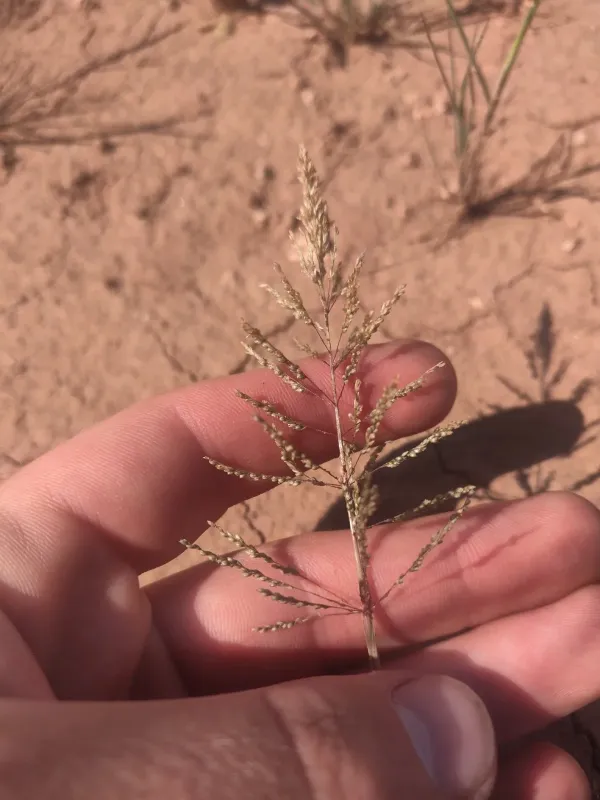
Description
Growing requirements
Pyramid dropseed (Sporobolus pyramidatus) is a perennial grass belonging to the Poaceae family. Native to parts of the Americas, this species is well-regarded for its resilience and ability to thrive in challenging environmental conditions.
The plant demonstrates significant drought tolerance, making it an ideal candidate for arid and semi-arid regions. It prefers well-drained soil but shows remarkable adaptability to various soil types, including those with moderate salinity.
Agricultural success with this grass relies on selecting open, sunny locations where it can express its growth potential. It is particularly effective in areas where other more demanding forage crops struggle to establish.
The root system of Pyramid dropseed is deep and fibrous, which provides both stability to the plant and erosion control for the soil. This structural feature allows it to survive periods of intense heat and low rainfall.
Botanically, the species is recognized by its distinctively shaped, pyramidal panicles. The leaves are generally narrow and tough, a characteristic trait that helps the plant conserve water during stressful growth periods.
Yield
Pyramid dropseed is primarily utilized as a forage grass in pasture-based livestock production. It provides a reliable food source for cattle and other ruminants, especially in regions where traditional pasture grasses are not viable.
The nutritive value is highest during the vegetative stage before the plant begins to lignify. Proper grazing management is essential to ensure that livestock access the forage while it is still palatable and nutrient-rich.
The biomass yield is heavily influenced by the availability of moisture. Under favorable conditions, the grass can produce multiple flushes of growth, providing a steady supply of fodder throughout the season.
This grass species is also highly valued for land reclamation projects. Its dense growth habit helps stabilize degraded soils and protects against both wind and water erosion, improving overall land quality.
Incorporating Pyramid dropseed into mixed pasture stands can enhance the overall stability of the forage supply. Its endurance during climatic stress ensures that grazing can continue even when more sensitive species go dormant.