
Miller-like ryegrass
Oloptum miliaceum
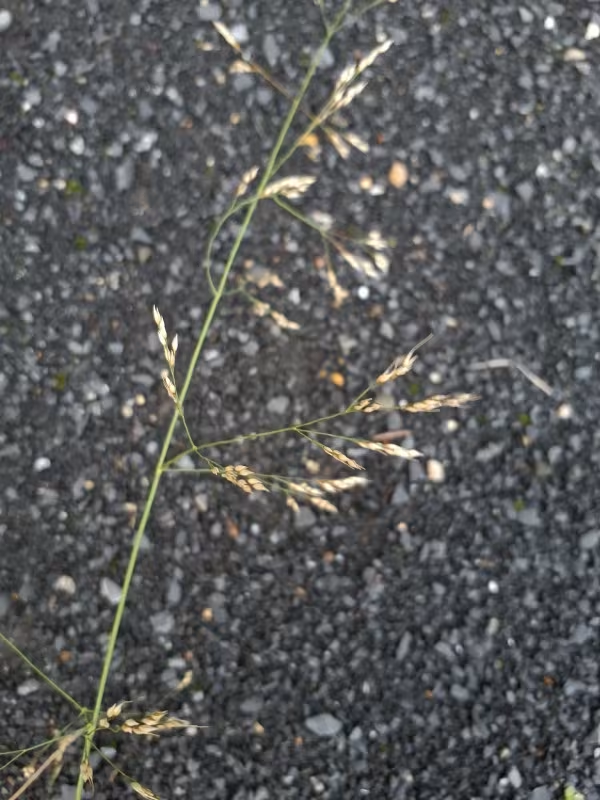
Description
Sowing dates
Oloptum miliaceum, commonly known as miller-like ryegrass, is a perennial grass species belonging to the Poaceae family. Sowing is best performed in early spring when soil moisture is sufficient to support consistent germination of the small seeds.
Winter sowing is also feasible in regions with mild winters, allowing seeds to undergo natural stratification. The optimal planting depth is shallow, usually ranging from 1 to 2 centimeters, as seeds have limited energy reserves.
Row seeding is recommended for pasture establishment, while wide-row spacing is often utilized for seed production. Firming the soil after sowing is a critical step to ensure adequate seed-to-soil contact and improve emergence rates.
The crop grows slowly during the first year, making effective weed management essential for successful establishment. It is advisable to choose fields that have been cleared of perennial weeds prior to planting.
This grass integrates well into seed mixtures with other legumes and grasses, contributing to the formation of stable and productive agricultural phytocenoses.
Growing requirements
This species is highly regarded for its ecological plasticity and strong drought tolerance. It is well-adapted to arid and semi-arid environments where other grass species struggle to maintain productivity.
It is not demanding regarding soil quality, preferring well-drained, sandy, or rocky soils. It demonstrates a notable ability to tolerate mildly saline conditions, making it suitable for marginal land reclamation.
The plant is sensitive to waterlogging and poor drainage. Therefore, fields prone to flooding or those with high water tables are unsuitable for successful long-term cultivation of this grass.
Adequate sunlight is necessary for optimal growth. Shading caused by weeds or dense tree cover can severely inhibit the plant's development and lead to a significant reduction in biomass yield.
Its high winter hardiness allows it to survive in regions characterized by significant temperature fluctuations, maintaining viability even after severe winters.
Yield
Yields of Oloptum miliaceum depend heavily on moisture availability and soil fertility levels. Under optimal conditions, the crop is capable of producing multiple cuts during a single growing season.
As a forage crop, it is highly palatable to livestock, including sheep, goats, and cattle. The high protein content during the heading stage makes it a valuable component for hay production.
The species shows good regrowth potential following grazing, which enables its effective use throughout the grazing season. Managed rotational grazing is recommended to maximize the lifespan of the stand.
Seed production is generally sufficient for self-regeneration of pastures. For commercial seed production, supplemental nitrogen fertilization in early spring can significantly boost yield.
When managed properly, a well-established stand can remain productive for many years, providing a consistent source of forage with minimal annual input.
Main diseases and pests
Oloptum miliaceum possesses high natural resistance to many common pathogens that affect cereal crops. Large-scale disease outbreaks in well-managed stands are rare.
Occasional pressure from insect pests, such as grass flies or aphids, may occur. Control measures should only be implemented if the population density exceeds economic damage thresholds.
Fungal diseases like rust or leaf spots may appear under conditions of persistent high humidity. Proper field hygiene and timely harvesting are the most effective preventive strategies.
Overgrazing poses the greatest threat to the longevity of the stand. Adhering to stocking rate limits is crucial to prevent thinning of the crop and subsequent encroachment by undesirable weeds.
Overall, the crop is considered robust and easy to maintain, making it a viable option for low-input or organic farming systems.
Harvesting
The optimal time for hay harvesting is the late boot to early heading stage. Harvesting at this time ensures the best balance between nutrient density and dry matter yield.
For haymaking, the grass is mowed and allowed to cure in windrows. Careful drying is essential to retain the leaves, which contain the majority of the plant's vitamins and minerals.
Seed harvesting should be timed precisely to prevent losses due to shattering, as the seeds detach easily when fully mature. Harvesting when the grains are firm is recommended.
Using combine harvesters with minimized cylinder speed helps reduce mechanical damage to the seeds. Proper setting of the equipment is vital for maintaining seed germination quality.
Post-harvest processing involves cleaning the seeds of impurities and drying them to a moisture content suitable for long-term warehouse storage.