
Hyperthelia dissoluta
Hyperthelia dissoluta
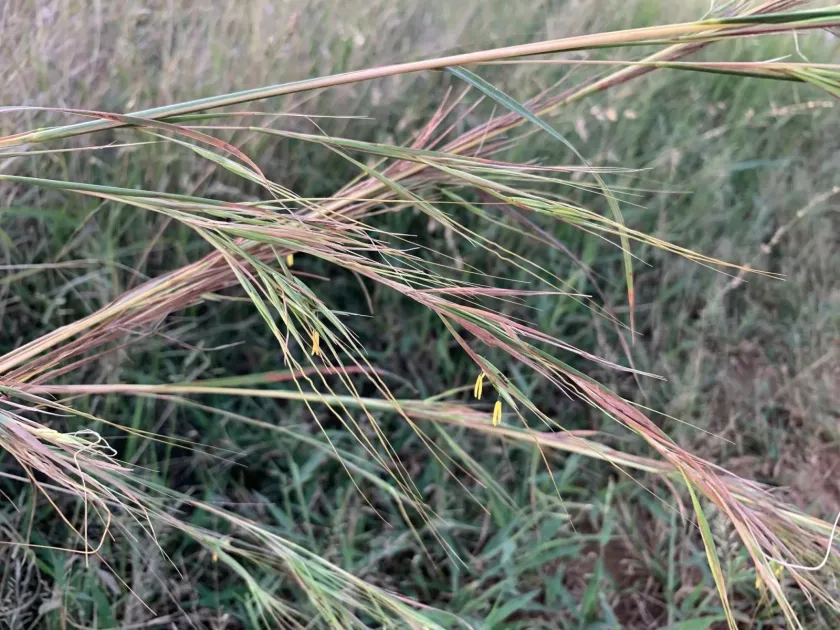
Description
Sowing dates
Hyperthelia dissoluta is a perennial grass species belonging to the Poaceae family. It is widely recognized in its natural range for its ability to establish persistent stands in varying ecological conditions, making it a valuable resource for grazing and fodder production.
Sowing should be performed when soil temperatures are consistently warm. The seeds require stable thermal conditions to break dormancy and initiate the germination process, which is critical for ensuring a uniform crop density.
A row-seeding method is recommended to provide optimal spacing between individual plants. This spacing prevents overcrowding and allows each plant to access sufficient light, water, and nutrients from the soil during the early stages of development.
Seed depth is a vital factor in successful establishment. Seeds should be planted at a shallow depth of 1–2 cm to ensure they can penetrate the soil surface efficiently while maintaining contact with the moisture required for metabolic activation.
Rolling the soil immediately after planting is a beneficial practice. It eliminates large air pockets and promotes capillary water movement from the soil to the seeds, significantly enhancing field emergence rates and seedling vigor.
Growing requirements
This species is highly adapted to tropical and subtropical climates, thriving under conditions of intense solar radiation. It performs best in open environments where there is minimal competition for sunlight from other tall vegetation.
Hyperthelia dissoluta prefers well-drained loamy soils. While it exhibits a certain degree of drought tolerance, consistent moisture availability during the growing season is necessary to maximize the production of lush green biomass.
Waterlogging is detrimental to the health of this grass. Poorly drained soils or sites with high water tables increase the risk of root rot and other moisture-related pathogens, which can rapidly lead to the thinning of the stand.
The plant demonstrates the best growth results in neutral to slightly acidic soil conditions. If the soil is excessively acidic, appropriate liming measures should be taken to improve nutrient bioavailability and overall plant health.
Maintenance of soil fertility is achieved through targeted applications of phosphorus and potassium fertilizers. Nitrogen supplementation can be effectively used during the active growth phase to boost leaf area development and biomass accumulation.
Yield
Biomass yield is highly dependent on management practices and the climatic conditions of the season. With proper care and timely harvest, the crop can consistently produce high-quality forage throughout the active growing period.
The species is known for its strong regenerative capacity after cutting or grazing. This regrowth potential allows for multiple harvests per season, maximizing the total volume of forage produced on a given plot of land.
Nutritional value is highest during the early vegetative stages. As the plants progress toward maturity, the fiber content increases, which reduces palatability and digestibility for livestock, highlighting the importance of timely harvesting.
Sustainable pasture management involves balancing stocking rates to prevent overgrazing. Maintaining a healthy balance allows the root system to store energy, ensuring that the grass can persist and produce for many years.
Yield estimation is usually based on the dry matter content per hectare. By applying modern agrotechnical approaches, producers can achieve high yields, making this grass a staple component of the local agricultural infrastructure.
Main diseases and pests
The main threats to the health of these grass stands include fungal diseases, such as leaf rust, which thrive under conditions of high humidity and poor airflow. Managing the density of the stand helps mitigate these risks.
Certain insect pests, including various species of stem-boring insects, can cause significant damage. Early detection through regular field scouting is essential to implement control measures before an infestation becomes widespread.
Overgrazing is a major biotic threat that leads to stand degradation. When cattle remove too much foliage, the plants lose their energy reserves, leading to reduced vigor and the encroachment of unwanted weed species.
Adverse weather events, such as heavy rain or strong winds during the growth cycle, can lead to lodging. While this does not kill the plants, it complicates mechanical harvesting and can reduce the overall quality of the forage.
- Leaf rust
- Root rot pathogens
- Stem-boring insects
- Grasshoppers and locusts
Harvesting
The ideal time for harvesting is during the early heading stage. This provides the best compromise between total yield and the concentration of vital nutrients, ensuring high feed quality for domestic animals.
When cutting for hay, a stubble height of 5–8 cm should be maintained. This height ensures that the meristematic tissues (growing points) remain protected, which is essential for rapid regrowth and stand longevity.
For hay production, the forage should be turned regularly to ensure uniform moisture removal. Drying the crop quickly prevents the degradation of vitamins and helps maintain the green color, which is a sign of high quality.
Storage should take place in dry, well-ventilated structures. Keeping the hay away from ground moisture and precipitation prevents the growth of mold and mildew, which can produce mycotoxins harmful to livestock.
Post-harvest management should include providing the plants with a period of recovery before the onset of dormancy. This allows the roots to accumulate the carbohydrates necessary for survival through the cold or dry season.