
Hyparrhenia nyassae
Hyparrhenia nyassae
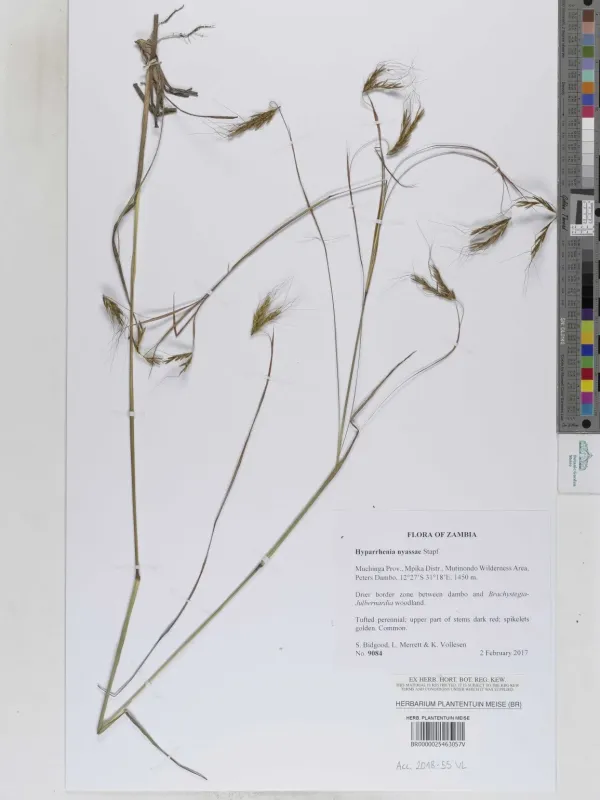
Description
Growing requirements
Hyparrhenia nyassae is a perennial grass species belonging to the Poaceae family. Known for its robust growth, it typically forms dense tufts, making it an excellent structural component for tropical grasslands.
Originating from the tropical regions of Africa, this species is naturally adapted to savanna landscapes. It thrives in environments where sunlight is abundant and seasonal rainfall patterns dictate the growth cycle.
Regarding soil requirements, the species favors well-drained loamy or sandy soils. It is highly sensitive to waterlogging, so proper site selection with adequate drainage is essential for successful establishment.
The climate requirements for this grass include high solar radiation and warm temperatures. It flourishes in frost-free regions where temperatures consistently remain above 20 degrees Celsius during the growing season.
In agricultural practice, it is primarily utilized as a forage source. Its ability to regrow after grazing or cutting makes it a valuable asset for maintaining sustainable livestock operations in warm climates.
Main diseases and pests
Common health issues for the crop include leaf rust and other fungal infections, which are often triggered by prolonged periods of high humidity or poor air circulation within the canopy.
Insect pests such as grasshoppers can cause significant damage to the foliage, especially in arid regions where other vegetation is scarce, leading to increased pest pressure on the cultivated grass.
Weed competition poses a primary risk during the initial establishment phase. Regular mechanical weeding is recommended to allow the perennial grass to gain enough strength and coverage.
To minimize disease outbreaks, it is crucial to avoid over-irrigation and to implement a grazing rotation scheme that prevents the grass from becoming overly dense and stagnant.
Effective monitoring for signs of stress or pest infestation should be conducted regularly, particularly at the start of the rainy season when growth rates peak.