
Spear grass
Heteropogon contortus (L.) P. Beauv. ex Roem. & Schult.
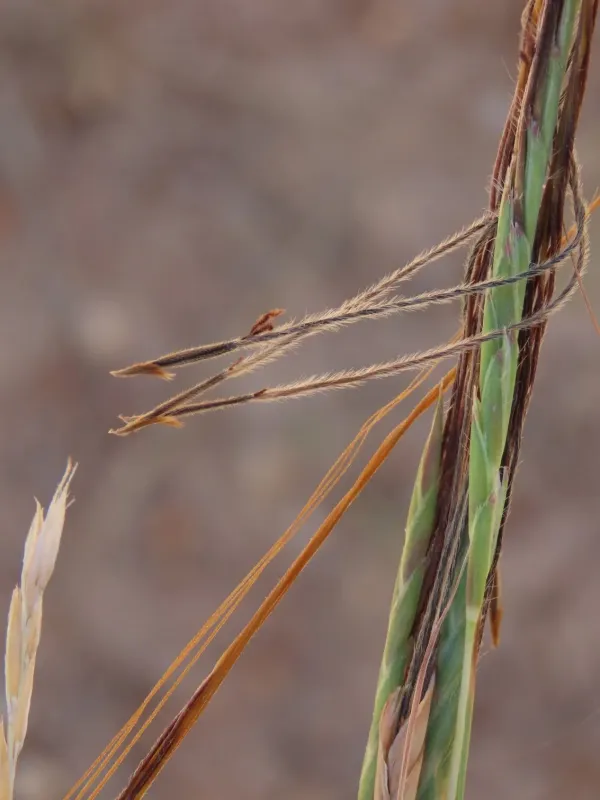
Description
Growing requirements
Heteropogon contortus, commonly known as spear grass or tanglehead, is a widespread perennial grass species belonging to the Poaceae family. It is naturally distributed across tropical and subtropical regions worldwide, thriving in diverse environments.
The plant is highly adaptable to various soil types, particularly well-drained, stony, or gravelly soils where other species might struggle. It is remarkably drought-tolerant, making it a valuable forage component in arid and semi-arid climates.
Spear grass requires significant solar radiation to reach peak growth. It is highly sensitive to shading, which is why it is most productive in open savanna-like landscapes or cleared pasture lands.
Soil management for this crop focuses on maintaining proper aeration. It does not tolerate waterlogging, so site selection should prioritize slope areas or elevated ground to prevent root decay during wet seasons.
The species exhibits a unique biological mechanism: its seeds are equipped with hygroscopic awns that twist in response to humidity changes, effectively drilling the seed into the soil to improve germination rates in dry conditions.
Yield
Spear grass is primarily utilized as a forage crop for livestock grazing. In its early vegetative stages, it provides high-quality nutrients that are easily consumed and digested by cattle and small ruminants.
The yield potential is highly dependent on grazing management strategies. Continuous, over-intensive grazing can lead to a reduction in stand density, whereas rotational grazing helps maintain long-term productivity and soil health.
As the plant matures, the nutritional quality declines rapidly as the stems lignify. Consequently, it is essential to manage the grazing schedule to utilize the biomass before the plants begin to flower and set seeds.
Beyond its forage value, the plant is extensively used in land reclamation projects. Its deep and expansive root system is highly effective in stabilizing soil, thereby mitigating wind and water erosion on vulnerable landscapes.
In regions where it is cultivated or naturally abundant, the grass can contribute significantly to the total biomass production of the ecosystem, supporting livestock production cycles throughout the growing season.
Main diseases and pests
While generally robust, Heteropogon contortus can be susceptible to fungal infections such as rust and leaf spots during periods of excessive humidity or poor air circulation within the canopy.
Insect pests include various foliage-feeding insects and root-boring larvae that can weaken the plant. Integrated pest management is recommended if infestations reach economic injury levels.
The most significant agricultural challenge is the mechanical damage caused to livestock. The sharp, barbed seeds and awns can embed themselves in animal hides, mouths, and eyes, necessitating careful timing to avoid grazing during the peak seed-shedding season.
Invasive species and encroaching woody plants pose a constant threat to stand persistence. Maintaining a competitive grass cover through appropriate fertilization and timely mowing is crucial for long-term survival.
Standard preventive measures against diseases involve proper site drainage and removing old, dead plant material to minimize the environment that promotes fungal pathogen survival.