
Hakonechloa macra
Hakonechloa macra (Munro) Makino
Description
Growing requirements
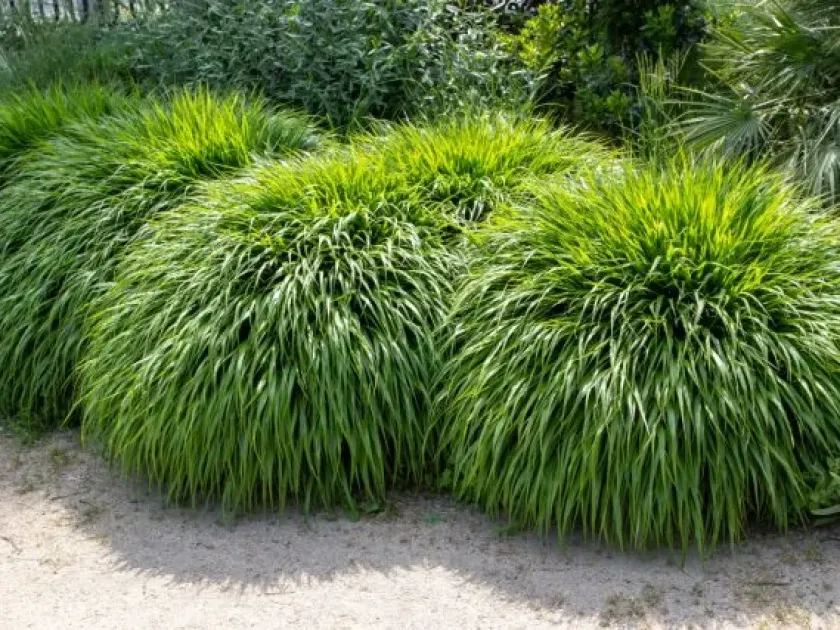
Hakonechloa macra, commonly known as Japanese forest grass, is a perennial member of the Poaceae family native to the mountainous regions of Japan. It is highly prized in horticulture for its cascading, arching foliage that creates a flowing effect in garden borders.
The plant thrives in partial shade and requires moist, well-draining, and humus-rich soil to reach its full potential. While it can tolerate more light in cooler climates, it typically dislikes full, harsh sun, which can scorch the delicate leaves during the peak of summer.
Botanically, it is a slow-growing grass that forms dense, fountain-like mounds. Its leaves are broad, linear, and often feature variegation in gold, white, or cream, making it a spectacular choice for illuminating dark, shaded areas of a landscape.
Proper cultivation involves consistent watering to maintain soil moisture and the application of balanced organic fertilizers in early spring to encourage vigorous growth. Division of clumps is the primary method of propagation, best performed in early spring as new growth begins.
Economically and aesthetically, Hakonechloa macra is a staple in ornamental horticulture, frequently used in rock gardens, woodland plantings, and container displays. Its ability to add texture and movement makes it a versatile plant for both modern and traditional gardens.
Main diseases and pests
Hakonechloa macra is remarkably resistant to most major diseases and insect pests, making it an excellent choice for low-maintenance landscaping. It does not suffer from typical cereal crop blights or infestations, ensuring steady growth throughout the season.
The primary threat remains overwatering, which may lead to crown rot in poorly drained, heavy clay soils. Gardeners should also be mindful of slugs and snails, which can occasionally damage the soft foliage during exceptionally damp or cool spring conditions.