
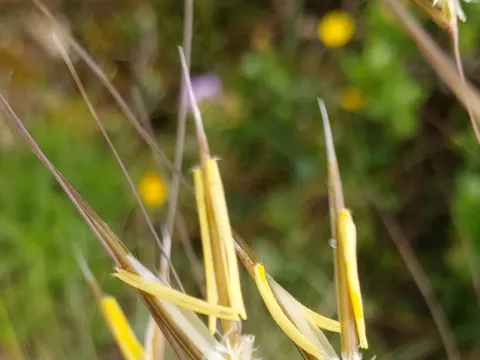
Feather grass
Celtica
Feather grass, belonging to the genus Celtica and the Poaceae family, is a perennial grass species primarily known for its adaptability to arid and semi-arid environments. These plants are essential components of steppe ecosystems and exhibit remarkable physiological resistance to drought and high temperatures.
What the section contains

Feather grass
The optimal conditions for cultivation include well-drained, nutrient-poor, or sandy soils where the root system can penetrate deeply without water stagnation. Excessive moisture is detrimental to the plant, often leading to root decay, which is why appropriate soil site selection is paramount for successful growth.
Botanically, Feather grass features dense tufts of narrow, often rolled leaves that help the plant retain moisture during dry periods. Its root architecture is highly developed, consisting of a deep, fibrous system that anchors the plant firmly and allows it to draw water from lower soil horizons that are inaccessible to other crops.
In terms of agricultural and land-use applications, the crop is primarily utilized for soil conservation and erosion control. By stabilizing loose soil, the plant plays a crucial role in preventing land degradation and is frequently used in land reclamation projects to restore vegetation cover on abandoned or damaged fields.
Furthermore, several species are valued in the horticultural industry for their elegant, feathery inflorescences. The maintenance requirements for this grass are minimal, as it requires little to no fertilization or supplemental irrigation once fully established, making it a sustainable choice for extensive landscape management.
Feather grass is relatively resilient to typical agricultural pests, yet it can be susceptible to rust fungi and powdery mildew if planted in environments with high humidity and poor air circulation. Insect pests, such as stem borers or aphids, may occasionally affect the vegetation, although significant outbreaks are rare in well-managed, open habitats.