
Giant feather grass
Celtica gigantea
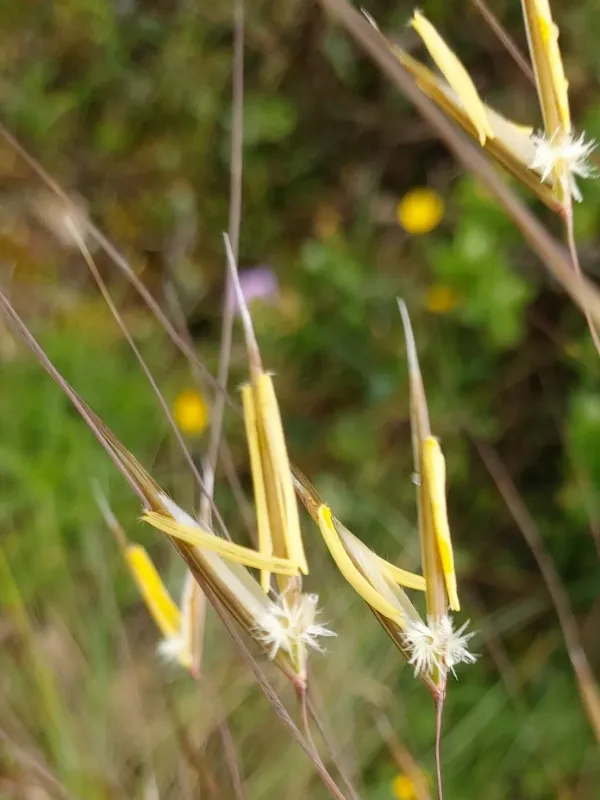
Description
Sowing dates
Sowing Giant feather grass is typically done in the spring once the soil has warmed up, or in the autumn in regions with milder climates. Seeds show good germination rates if stratified or if fresh seed material is used.
For establishing high-quality planting beds or ornamental clumps, a spacing of at least 60–80 centimeters between plants is recommended. This allows the grass to develop fully and showcase its unique inflorescences.
Seeds should be sown at a depth of no more than 1–2 centimeters, as they require light for germination. It is advisable to lightly firm the soil surface after sowing to ensure proper contact between the seeds and the substrate.
Seedlings emerge gradually, so maintaining moderate moisture during the first few weeks is crucial. Early growth stages are slow, requiring careful monitoring to prevent weed competition.
Using a container method for seedling production significantly improves the establishment success rate when the plants are transplanted into the open ground during the summer.
Growing requirements
Giant feather grass, belonging to the Poaceae family, is a drought-tolerant plant that thrives in open, sunny locations. It performs poorly in shade, which leads to loss of ornamental appeal and weak flowering.
The crop has low requirements for soil fertility, but excellent drainage is critically important. The plant absolutely does not tolerate waterlogging in the root zone, especially during the winter months.
Dry, calcareous, sandy, or loamy soils with a neutral to slightly alkaline reaction are preferred. Excessive application of organic fertilizers can be detrimental to the development of its robust root system.
In terms of climate, Giant feather grass is relatively frost-hardy, although it requires protection from excessive winter moisture in harsh climates, which can cause crown rot.
Optimal agrotechnics include minimal intervention: regular weeding during the first year and light cultivation around the base of the plant to aerate the roots.
Yield
The yield of Giant feather grass in an agricultural context is generally evaluated by the biomass produced per unit area or the quantity of quality seed material collected.
In ornamental nursery production, productivity is expressed by the number of commercial-sized units ready for sale to landscape projects.
In natural habitats, the crop provides a stable volume of above-ground biomass, which in arid regions can be used as roughage for livestock, although its nutritional value is relatively low.
Seed harvesting requires precise timing: seeds should be collected after the panicles have fully matured and turned a characteristic golden color. It is important to harvest before the seeds are dispersed by the wind.
The overall productivity of the crop depends heavily on the site conditions: when planted in well-drained soil, the plant can maintain vitality and ornamental value for over ten years.
Main diseases and pests
Giant feather grass possesses high natural resistance to diseases, making it an extremely attractive choice for low-maintenance gardening and landscaping.
The primary threat to root health is fungal disease, which occurs exclusively due to water stagnation in the soil. Root rot can quickly destroy even mature plants if irrigation is mismanaged.
Pests rarely cause serious damage to the crop. In occasional cases, aphids or spider mites may occur, but these infestations are usually localized and do not require intensive chemical control.
The most significant challenge is competition from aggressive weeds during the early stages of vegetation. Once established, a healthy, vigorous clump effectively suppresses most weeds around it.
To prevent the spread of fungal pathogens, it is important to ensure good air circulation between plants and avoid overcrowding in humid conditions.
Harvesting
Harvesting of the above-ground biomass is best performed in late winter or early spring. The old foliage should be cut back low before the new green growth begins to emerge.
Cutting should be done at a height of 5–10 centimeters above the ground. This encourages the plant to produce new, healthy shoots and restores its attractive ornamental appearance.
For ornamental purposes, the dry inflorescences are often left standing throughout the winter, as they retain architectural interest under frost and snow until early spring.
Seed material is collected manually as individual panicles mature. After harvest, seeds are cured and cleaned of debris in dry, well-ventilated rooms.
Removing biomass at the end of the season is an important preventive measure that helps reduce the risk of pathogen buildup within old, decaying plant material.