
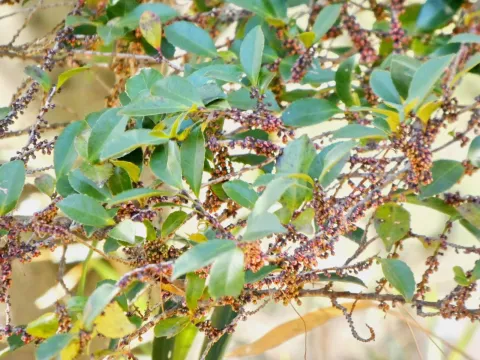
Eurya
Eurya
Eurya is a genus of evergreen shrubs or small trees belonging to the Pentaphylacaceae family. In their natural habitat, they are widely distributed across the tropical and subtropical regions of Asia, including Japan, China, and various Pacific islands.
What the section contains


Eurya
For successful growth, Eurya requires well-drained, acidic soil that is rich in organic matter. The crop prefers locations with dappled sunlight or partial shade, as intense direct sunlight can cause scorching on its glossy, leathery foliage.
The plant has high humidity requirements for both air and soil, making regular watering and mulching essential in drier climates. Eurya is particularly sensitive to waterlogging, which can quickly lead to root rot and systemic decline.
Regarding temperature, Eurya is sensitive to hard frosts, which is why in temperate zones it is primarily grown as a container plant or in climate-controlled conservatories. The ideal temperature for active vegetation ranges between 18 and 25 degrees Celsius.
The primary horticultural use of Eurya is ornamental. Due to its dense growth habit and evergreen leaves, it is frequently employed for creating structured hedges, topiary shapes, and traditional Japanese garden designs.
The main threats to Eurya include fungal diseases resulting from improper irrigation management or poor air circulation. Root rot and various leaf spot pathogens are common, often requiring the application of specialized fungicides for control.
Among pests, spider mites and scale insects pose the most significant risk, especially when the plant is kept in indoor environments with low humidity. Regular inspections and the application of appropriate insecticides are recommended to prevent infestations.