
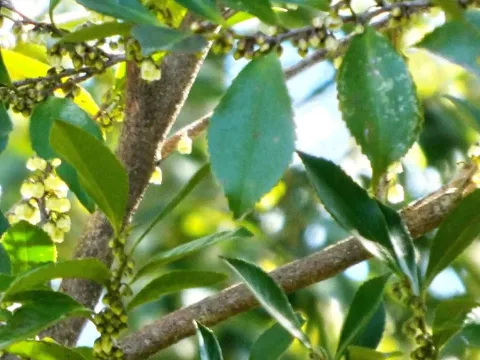
Eurya
Eurya Thunb.
Eurya is a genus of evergreen shrubs and small trees belonging to the family Pentaphylacaceae. Naturally occurring in tropical and subtropical regions across Asia, including Japan, China, and various Pacific islands, these plants have adapted to high-humidity environments.
What the section contains


Eurya
Successful cultivation requires a climate that mimics their natural habitat. Eurya plants thrive in areas shielded from harsh, drying winds and generally require stable, high levels of atmospheric humidity, making them excellent choices for conservatories or mild subtropical gardens.
Soil conditions are critical for the health of Eurya. They require well-drained, acidic to slightly acidic soils rich in organic matter. Proper drainage is essential, as the roots are sensitive to waterlogging, which can quickly lead to physiological stress and pathogen attack.
In landscaping, Eurya is highly valued for its dense, glossy, leathery foliage. It is frequently employed as an ornamental specimen or shaped into formal hedges, as the species tolerates pruning well, allowing gardeners to maintain a compact and tidy appearance.
Beyond its ornamental use, Eurya has historical and scientific interest. Some species contain bioactive compounds such as flavonoids and triterpenoids, which have been studied in botanical research for their potential antioxidant and pharmacological properties.
Root rot is the most significant threat to Eurya, primarily caused by improper watering practices or heavy, poorly drained soil. When water saturates the rhizosphere, fungal pathogens can easily compromise the plant's structural integrity.
Common pests such as scale insects and mealybugs often inhabit the dense foliage. These pests feed on plant sap, leading to weakened growth, yellowing leaves, and the secretion of honeydew, which promotes the growth of sooty mold on the leaf surfaces.
Spider mites can become a severe problem in enclosed environments with low humidity levels. Regular monitoring of the underside of leaves is necessary to catch infestations early before they cause significant aesthetic damage to the shrub.
Nutritional deficiencies, specifically iron-induced chlorosis, frequently occur if the soil pH is too high. This results in interveinal yellowing, which significantly impacts the plant's overall health and visual appeal if not corrected with soil acidifiers.
Effective management includes implementing integrated pest management (IPM) strategies, maintaining proper soil acidity, and ensuring consistent but non-excessive irrigation. Chemical interventions should be used judiciously to avoid environmental damage.