
Notelaea longifolia
Notelaea longifolia
Description
Growing requirements
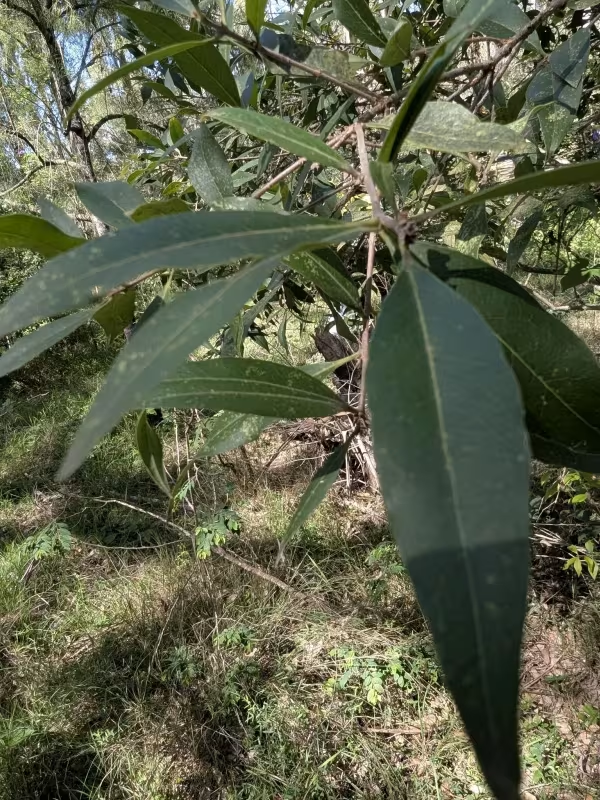
Notelaea longifolia, commonly known as the long-leaved mock olive, belongs to the Oleaceae family and is native to the coastal regions of eastern Australia. It is a resilient evergreen shrub that thrives in a variety of forest habitats, demonstrating strong adaptability to different light conditions.
For successful cultivation, the plant prefers well-drained, fertile soil with a slightly acidic to neutral pH. It is crucial to ensure that the site does not have standing water, as the root system is susceptible to decay in waterlogged conditions, particularly in heavier clay soils.
Climatic requirements involve moderate subtropical temperatures. While the shrub is relatively hardy, it performs best in locations that offer protection from harsh frosts and strong, drying winds, which can cause significant damage to the foliage of young plants.
During the establishment phase, consistent moisture is vital. Once the root system is deeply established, the plant becomes reasonably drought-tolerant, although supplementary irrigation during prolonged dry spells will significantly enhance the growth rate and overall foliage density.
Agronomic management includes annual fertilization during the spring to support vigorous growth. Organic mulching is highly recommended as it helps maintain soil moisture levels and provides essential nutrients as the mulch decomposes, mimicking the natural forest floor environment.
Harvesting
The primary utility of Notelaea longifolia lies in its application for ornamental hedging, screening, and ecological restoration. It serves as an excellent plant for creating privacy buffers and restoring degraded habitats due to its dense growth habit and longevity.
Harvesting in the context of this species refers to the collection of vegetative material for propagation or the systematic pruning of hedge lines. Pruning should be conducted in late winter or early spring to encourage dense foliage and maintain the desired shape and height.
Propagation is most successful through semi-hardwood cuttings taken during the growing season. Utilizing appropriate rooting hormones and high-humidity environments ensures a higher success rate for commercial nurseries aiming to scale up production.
In landscape management, the plant provides significant ecological benefits. Its foliage provides shelter for native wildlife, making it a preferred choice for sustainable agricultural projects looking to incorporate native biodiversity into their overall property management.
Maintaining the health of the plant requires regular monitoring for pests. While generally robust, keeping the crown open through periodic thinning allows for better air circulation, which prevents the development of fungal pathogens common in dense evergreen plantings.