
Wyoming sand verbena
Abronia ammophila
Description
Growing requirements
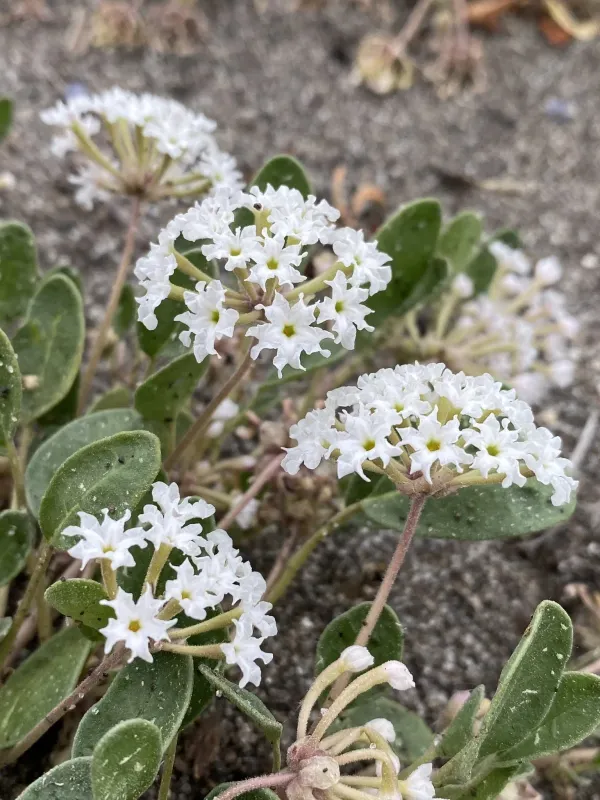
Wyoming sand verbena (Abronia ammophila) is a perennial herbaceous plant belonging to the Nyctaginaceae family. It is an extremely rare species endemic to the sandy shores of Yellowstone Lake in Wyoming, USA, where it thrives in specialized conditions.
Botanically, this plant is a xerophyte, adapted to survive in loose, nutrient-poor sands. Its root system is deeply anchored, and its leaf structure is optimized to prevent moisture loss, allowing it to withstand high winds and abrasive sand particles.
The soil requirements are strict: it demands well-drained, sandy substrate. It cannot tolerate heavy, clay-based soils or environments with high levels of organic matter, which typically lead to root rot and fungal proliferation.
Climatically, it requires full sun exposure and is well-adapted to wide temperature fluctuations characteristic of high-altitude desert environments. It is a light-demanding crop that performs best in open areas with minimal competition.
In cultivation, this species is primarily valued by botanic gardens and enthusiasts of rare plants. Its unique adaptation to sandy habitats makes it an interesting subject for landscape projects focusing on arid-land restoration and conservation.
Main diseases and pests
One of the primary threats to the species is the invasion of non-native plant species. These intruders often colonize the area, competing for space and nutrients, which the sand verbena is not evolved to fight against.
Root rot and crown diseases pose a significant risk when the plant is grown in conditions with poor drainage or high humidity. Maintaining a very lean, porous substrate is crucial for disease prevention.
Insect pests, specifically those targeting succulent-like vegetation, can jeopardize the health of the plants in controlled environments. Regular inspection and natural pest control methods are recommended.
Human activities, such as trampling in dune ecosystems, can destroy fragile root networks. Conservation of the natural habitat is essential to prevent the extinction of this already vulnerable population.
Climate change, which alters the water levels of the lakes and the stability of the dunes, serves as a long-term threat to the survival of the species in its endemic range.