
Yellow sand verbena
Abronia latifolia
Description
Sowing dates
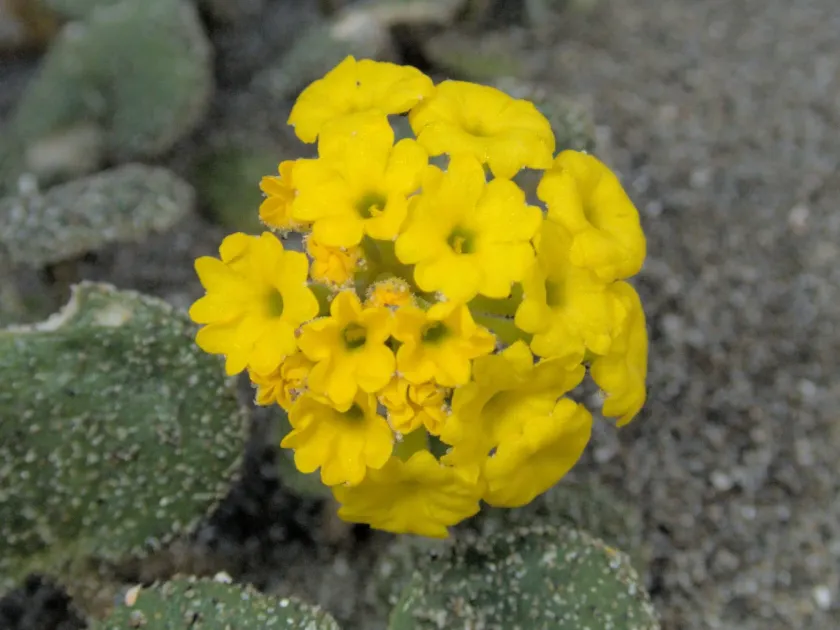
Yellow sand verbena belongs to the Nyctaginaceae family. It is a perennial herbaceous plant native to the sandy beaches of the Pacific coast, often grown for its aromatic flowers and trailing habit.
For cultivation, seeds should be sown in early spring in well-draining, sandy containers. The seed coat is typically tough, so mechanical scarification or soaking can accelerate germination.
The optimal temperature for seed germination ranges between 18 and 22 degrees Celsius. During this phase, it is crucial to keep the substrate slightly moist but never waterlogged.
Transplanting seedlings to their permanent location should be done carefully, as the plant develops a long taproot. Minimizing root disturbance is key to successful establishment in the field.
Spacing should allow for the plant's natural spread, usually requiring about 40 to 50 centimeters between individual plants to prevent competition for sunlight and space.
Growing requirements
This species is highly adapted to sandy, nutrient-poor environments. It thrives in loose, shifting sands and is rarely found in heavy, clay-based soils that retain moisture for too long.
Full sun is a non-negotiable requirement for Abronia latifolia. The plant requires direct sunlight to produce its signature yellow, fragrant flowers and to maintain compact growth.
Drought tolerance is a hallmark of this plant. Once established, it can survive on very little rainfall, relying on deep root systems to access moisture trapped in the lower layers of the sand.
Saline tolerance allows the plant to grow in close proximity to the ocean. It is well-suited for coastal gardens where salt spray and sandy winds would kill more sensitive species.
Air circulation is vital for this plant, as it helps regulate the microclimate around the foliage. Good airflow prevents the accumulation of humidity that can lead to fungal issues.
Main diseases and pests
Root rot is the most significant threat to yellow sand verbena. It is almost always a result of poor drainage or overwatering, which prevents the roots from accessing necessary oxygen.
Aphids can cause damage to tender flower buds during the growth season. Regular monitoring and the use of physical barriers or organic soap sprays are recommended for control.
Spider mites can colonize the plant during hot, dry spells, leading to stunted growth and discolored leaves. Maintaining proper plant health can help the species better withstand these attacks.
Powdery mildew may occur if the plant is grown in an environment with poor airflow and high humidity. Ensuring adequate spacing is the best preventative measure against this pathogen.
Slugs and snails can consume young sprouts in early stages. Protective measures like copper tape or gravel barriers can be used to deter these pests from reaching the young foliage.