
Alpine sand verbena
Abronia alpina
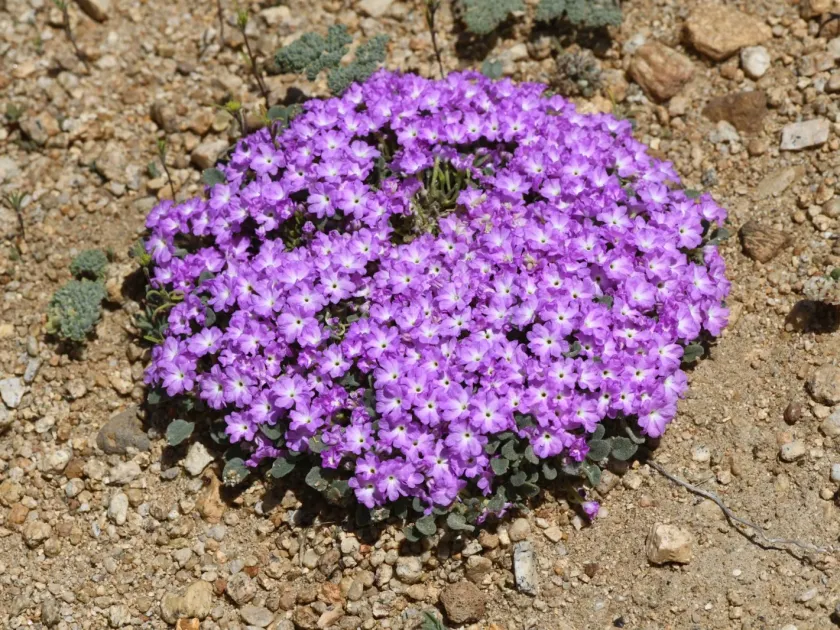
Description
Growing requirements
Alpine sand verbena (Abronia alpina) is a rare herbaceous perennial plant belonging to the Nyctaginaceae family. It is an endemic species strictly limited to the sandy, granitic soil habitats found at high elevations within the Sierra Nevada mountains in California.
The botanical characteristics of this species include a low-growing, mat-forming habit and glandular-pubescent foliage. These adaptations allow the plant to thrive in an environment characterized by extreme wind exposure and high ultraviolet radiation, typical of alpine ecosystems.
The primary growing requirement is a highly specific substrate, which must be deep, well-drained, and composed of decomposed granite or similar sandy material. It cannot tolerate waterlogging or clay-heavy soils, which interfere with the aeration needed by its sensitive root system.
Climate needs are strictly defined by the short alpine growing season. The plant requires intense solar irradiance during the day and sharp drops in temperature at night, mirroring the natural cycle of the high-altitude sites where it is naturally found.
Regarding its utility, the species is currently not utilized in commercial agriculture. Due to its status as a sensitive and rare plant, it is primarily studied within the framework of conservation biology to ensure the preservation of its natural habitat and population stability.