
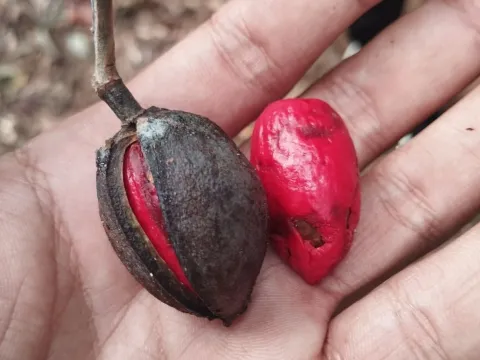
Virola
Virola
Virola is a genus of evergreen trees belonging to the Myristicaceae family. These trees are native to the tropical regions of Central and South America, where they play a significant role in the structure of moist forest ecosystems and canopy development.
What the section contains


Virola
The successful cultivation of Virola requires nutrient-rich, well-drained soils. Although the trees thrive in high-rainfall environments, they are highly sensitive to waterlogging. Therefore, selecting sites with effective natural or artificial drainage is critical for preventing root suffocation.
Climate requirements for this crop involve consistently high temperatures throughout the year. Virola is strictly tropical and cannot tolerate frost or significant temperature drops, which restricts its commercial cultivation to specific equatorial and sub-equatorial latitudes.
In terms of agrotechnology, young seedlings require protection from direct, intense sunlight, often provided by a nursery canopy or shade cloth. As the trees mature, they become more resilient to light and develop a large, spreading crown that eventually dominates the forest floor.
The primary economic use of Virola is its timber, which is valued for furniture, plywood, and general construction. Furthermore, the tree is subject to research for its potential use in ethnomedicine and the extraction of various secondary metabolites from its resins and seeds.
Fungal pathogens represent the most significant threat to Virola plantations, particularly in environments with sustained high humidity. These infections can lead to root rot and bark lesions, which hinder nutrient transport and can cause eventual tree death if not monitored.
Boring insects, such as various species of wood-boring beetles, pose a major risk to the structural integrity of the timber. These pests tunnel into the trunk, reducing the market value of the wood and creating entry points for opportunistic bacterial or fungal infestations.
Defoliating insects can significantly impact young saplings by reducing their leaf area and, consequently, their photosynthetic capacity. Regular scouting of plantations is necessary to detect early-stage damage and prevent localized outbreaks from spreading to healthy trees.
Soil-related health issues, including nutrient deficiencies or pH imbalances, can lead to stunted growth. Maintaining soil fertility through organic amendments and regular monitoring is essential for sustaining long-term productivity in plantation settings.
The long-term survival of the genus faces challenges from deforestation and habitat fragmentation. Sustainable management practices, aimed at integrating Virola into agroforestry systems, are being developed to preserve the genetic stock and promote commercial reforestation efforts.