
Philippine nutmeg
Myristica philippensis
Description
Growing requirements
Philippine nutmeg (Myristica philippensis) is a perennial evergreen tree belonging to the family Myristicaceae. Native to the tropical rainforests of the Philippines, it is a species adapted to high humidity and stable year-round temperatures.
The climate requirements for this culture are strictly tropical. The plant thrives in environments where temperatures remain consistently warm, and it lacks any tolerance for frost or cool winds, which can rapidly damage its delicate canopy.
Regarding soil conditions, the tree requires deep, fertile, and well-draining soil. It is particularly sensitive to waterlogging, so planting on slightly elevated sites or ensuring optimal soil porosity is essential for healthy root system development.
Cultural practices include the management of light levels. Young trees require shade to protect them from excessive solar radiation, while mature specimens can tolerate more light, though they still benefit from the protected microclimate of mixed plantations.
The maintenance of organic matter in the soil is crucial for the Philippine nutmeg. Regular application of organic fertilizers helps maintain the nutrient profile of the soil, which is often leached by heavy tropical rains.
Yield
The economic value of Myristica philippensis lies in its aromatic seeds, which are harvested for essential oil production and as a spice. Productivity is a long-term goal, as the tree exhibits a relatively slow maturation cycle.
The time to first harvest typically spans seven to ten years. This long juvenile phase requires growers to implement long-term plantation management strategies to ensure the survival and health of the trees during their development.
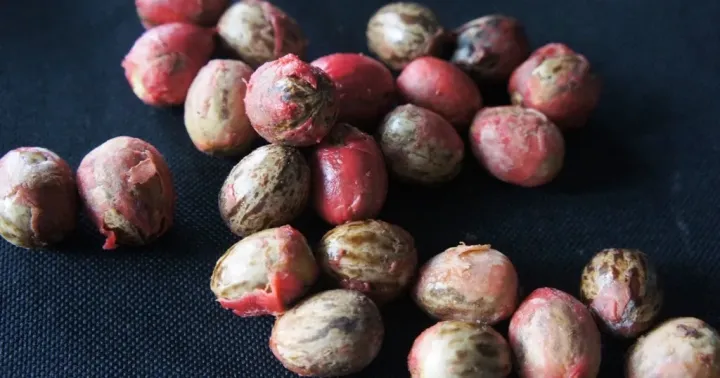
Harvesting is a manual process that targets ripe fruits. As the fruit dehisces, the inner seed, surrounded by a red aril, is collected. Timing is critical to ensure the concentration of aromatic compounds is at its peak.
Post-harvest processing involves careful drying to lower the moisture content of the seeds. This step is vital for preventing microbial growth, as the high humidity of the natural habitat makes the product highly susceptible to mold.
Properly managed, an adult tree provides consistent annual yields. The longevity of the tree allows for sustainable harvesting for many years, provided that pests are controlled and soil fertility is monitored.