
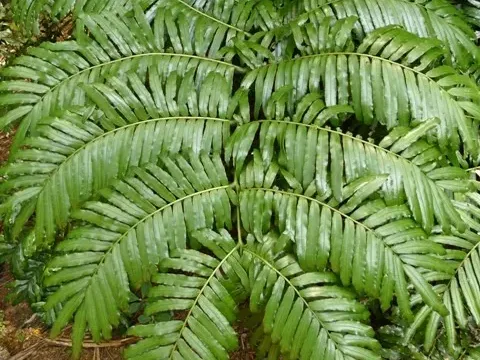
Marattia
Marattia
Marattia is a genus of large ferns belonging to the family Marattiaceae, often described as ancient living fossils. They represent one of the oldest lineages of ferns, with a morphology that has remained largely unchanged since the Paleozoic era.
What the section contains

Marattia
These plants are native to tropical rainforests in Central and South America, as well as parts of the Pacific region. In their natural habitat, they thrive in deep shade, high-humidity environments, typically found on the forest floor near streams or ravines.
The botanical structure consists of a stout, fleshy rhizome and large fronds. A characteristic feature is the presence of fleshy stipules at the base of the petioles, which protect the developing buds as they emerge.
To cultivate Marattia successfully, one must maintain a constant tropical climate with temperatures between 20 and 25 degrees Celsius. They require high ambient humidity; failure to provide this will result in the rapid browning and curling of the fronds.
The growing medium must be highly porous and moisture-retentive, such as a mix of peat, sphagnum moss, and orchid bark. Proper drainage is essential, as the fleshy rhizomes are prone to rot if kept in waterlogged or compacted soil.
The primary pests affecting Marattia include scale insects and mealybugs, which tend to hide within the junctions of the fronds and the fleshy rhizome. Early detection and mechanical removal are the most effective control measures.
Root rot is the most common pathology, usually caused by overwatering or poor soil aeration. Once the rhizome begins to rot, recovery is difficult, and immediate surgical removal of the affected tissue is necessary to save the specimen.
Fungal diseases, such as leaf spot, may occur if the foliage is kept wet and the ventilation is insufficient. Avoiding water on the leaves during low-temperature periods is a key cultural practice to prevent these infections.
Marattia is sensitive to chemicals and mineral salts. Using tap water high in chlorine or fluoride often leads to necrotic spots on the leaves, indicating chemical stress on the vascular system of the plant.
Integrated pest management, focusing on maintaining stable humidity and avoiding environmental stressors, is the best strategy. Providing adequate air circulation is critical to reducing the risk of humidity-related pathogens in closed environments.