
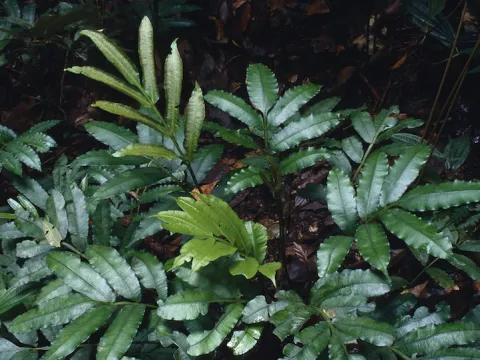
Danaea
Danaea
Danaea is a genus of tropical ferns belonging to the Marattiaceae family. These plants are native to the understory of humid tropical forests in Central and South America, as well as the Caribbean region, where they thrive in shaded and moist environments.
What the section contains

Danaea
For successful cultivation, Danaea requires specific conditions that closely mimic its natural habitat: high atmospheric humidity (exceeding 80%) and consistently warm temperatures without extreme fluctuations. Direct sunlight is harmful to the plant, necessitating the use of specialized shading in greenhouse or indoor environments.
The soil substrate must be loose, rich in organic matter, and possess excellent drainage capabilities. The plant prefers slightly acidic soil mixtures that retain moisture while preventing waterlogging, which is critical to avoid root rot and other physiological disorders.
Botanically, Danaea is characterized by leathery, often pinnate leaves. A key diagnostic feature of the genus is marked dimorphism, where fertile leaves (sporophylls) differ significantly in shape and size from sterile vegetative leaves, typically being narrower and longer.
The economic use of Danaea is primarily limited to botanical collections and specialized horticulture. Due to the difficulty of maintaining the necessary microclimate, it is rarely found in mass production, serving mainly as an object of scientific interest and ornamental value in conservatories.
In indoor or greenhouse cultivation, the primary threats to Danaea are fungal infections triggered by overwatering and poor air circulation. Root rot is the most dangerous pathogen, capable of destroying a plant specimen very rapidly if the substrate remains waterlogged.
Among common pests, scale insects and mealybugs represent the highest risk. Their presence is frequently associated with poor ventilation and an imbalance in the humidity levels within the growing environment.
Spider mites can also infest the plants under conditions of low humidity, causing leaf deformation and loss of aesthetic appeal. Regular misting and monitoring are essential components of a preventative care strategy.
To combat pests, it is recommended to use biological control methods or mild insecticidal soaps, as the delicate tissues of these ferns can be sensitive to concentrated synthetic chemical treatments.
Regular sanitary pruning of damaged or senescent fronds helps minimize the spread of pathogens and encourages better airflow within the canopy, reducing the overall risk of disease development.