
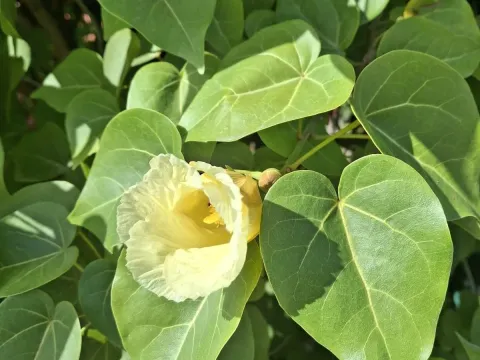
Thespesia
Thespesia
The propagation of Thespesia, particularly Thespesia populnea, is primarily conducted through seeds. Due to the hard seed coat, pre-sowing treatments such as scarification or soaking in warm water for 24 hours are essential to break dormancy and ensure uniform germination.
What the section contains

Thespesia
The ideal sowing period aligns with the onset of the wet season, as moisture is crucial for the establishment of young seedlings. In large-scale plantations, nursery-raised seedlings are preferred over direct seeding to guarantee higher survival rates and more vigorous initial growth.
Choosing the correct site involves selecting areas with full sun exposure. While young saplings require partial shade for their first few months to prevent dehydration, mature plants thrive in high-light conditions which are necessary for proper crown development.
Planting pits should be prepared according to the soil conditions, usually measuring 50x50x50 cm, ensuring the substrate is well-draining. A spacing of 5 to 7 meters between trees is standard to allow for healthy branch expansion and root competition management.
Success in sowing depends on the soil quality of the nursery bed; it should be loose, organic-rich, and maintained at a neutral pH to facilitate the development of a robust root system before the field transplanting stage.
Thespesia belongs to the Malvaceae family and is inherently adapted to tropical climates. It is highly valued for its ability to grow in coastal environments, exhibiting significant tolerance to salt spray and saline soil conditions that would be unsuitable for most other crops.
The plant requires high temperatures throughout the year and has no frost tolerance. It thrives in well-drained, sandy, or alluvial soils, common in coastal or riparian ecosystems, but can adapt to various soil textures provided they are not waterlogged.
Water requirements vary by growth stage; while the mature tree is remarkably drought-resistant, consistent water supply is critical during the establishment phase to ensure rapid growth and high-quality biomass production.
Light intensity is the primary driver of tree architecture. Full solar radiation is required for the tree to develop a dense, healthy canopy and to stimulate profuse flowering, which is characteristic of the species throughout the year.
The species serves an important agricultural role as a windbreak. Its dense foliage and flexible, strong wood allow it to withstand heavy gusts, protecting delicate agricultural crops from maritime winds and erosion in coastal zones.
The primary threats to Thespesia include fungal pathogens that manifest as leaf spots or stem decay, especially in high-humidity regions where airflow within the canopy is restricted. Proper spacing and pruning are key mitigation strategies.
Insect pests such as leaf-eating beetles and caterpillars are the most common biological threats. These can significantly defoliate young trees if not managed, hindering their overall physiological development and growth rate.
Sucking insects, including aphids and mealybugs, can also colonize the plant. They weaken the tree by extracting sap and secrete honeydew, which often leads to the growth of sooty mold, negatively impacting the aesthetics and health of the foliage.
Preventive maintenance involves regular inspection of the crown and the removal of dead or infected branches. Maintaining a clean orchard floor, free of rotting debris, reduces the risk of pest populations settling and disease transmission.
Integrated Pest Management (IPM) is recommended for commercial cultivation. This involves monitoring threshold levels of pests and utilizing biological control agents or targeted, low-toxicity insecticides when necessary to minimize the environmental footprint.