
Thespesia populnea
Thespesia populnea (L.) Sol. ex Corrêa
Description
Growing requirements
Thespesia populnea, commonly known as the Portia tree, is a member of the Malvaceae family. It is a robust, evergreen tree widely distributed throughout the tropical coastal regions of the world.
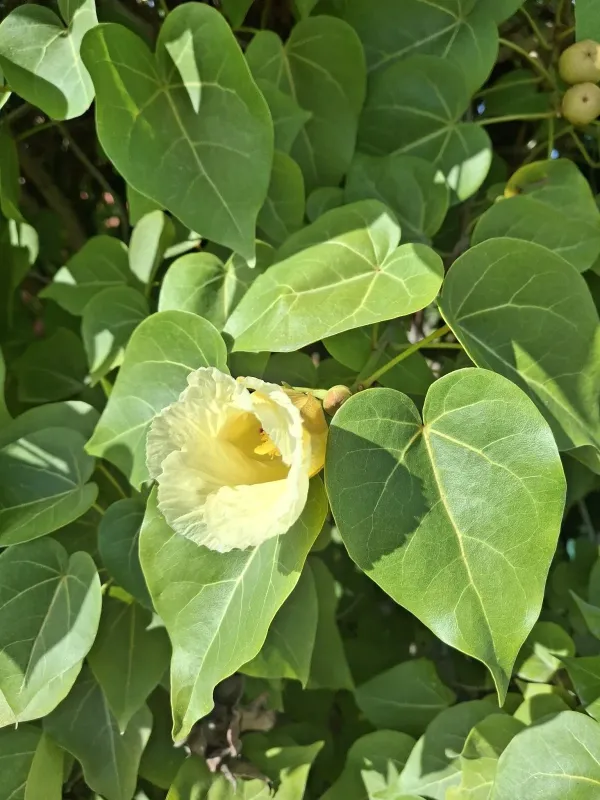
Botanically, it is characterized by its glossy heart-shaped leaves and large, yellow bell-shaped flowers. The tree is highly salt-tolerant, making it an excellent candidate for coastal reforestation and windbreaks.
The species thrives in full sunlight and prefers sandy, well-drained soils. It requires consistent warm temperatures and does not tolerate freezing conditions, which strictly limits its cultivation area.
The tree is cultivated for its high-quality, durable timber, which is often used in cabinetry and woodcarving. Additionally, all parts of the plant, including seeds and bark, have historical medicinal applications.
It is also a significant species for local ecosystems, providing habitat and fodder in various tropical environments. Its rapid growth makes it a preferred plant for fast-growing forestry projects in its native range.
Main diseases and pests
The tree is generally resilient, but excessive humidity can lead to fungal leaf spots. Proper spacing during plantation is essential to maintain airflow and prevent moisture accumulation in the canopy.
Pests such as aphids and mealybugs can occasionally infest tender shoots. Monitoring these populations is key to maintaining the health of younger trees during their formative years.
Root rot is a major threat caused by waterlogged soil conditions. Ensuring that the planting site has excellent drainage is the most effective preventative measure against soil-borne pathogens.
Boring insects may cause structural damage to the trunk. Regular inspection of the bark for entry holes and maintaining tree vigor are standard practices for long-term management.
Integrated pest management strategies should prioritize biological controls to protect the natural balance, especially in agroforestry systems where the plant is grown alongside other food crops.