
Corchoropsis crenata
Corchoropsis crenata
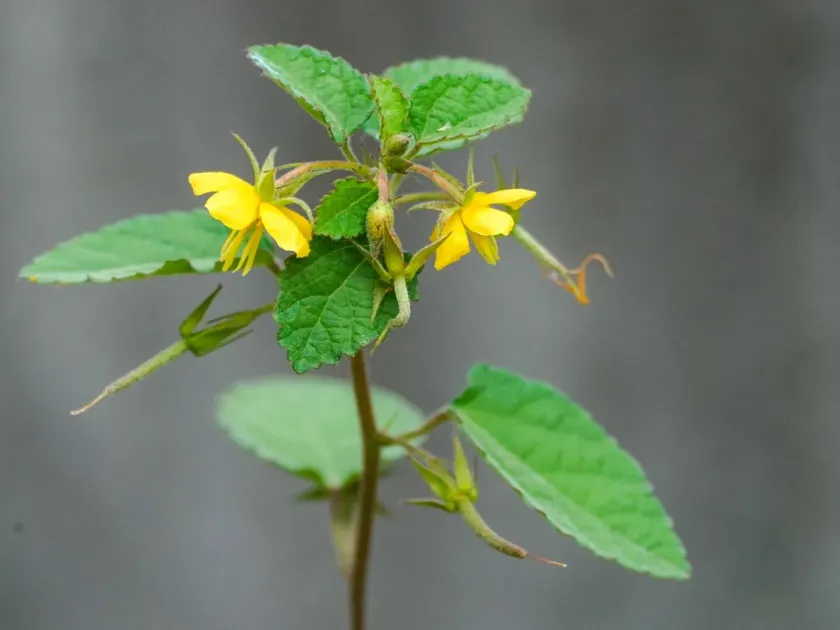
Description
Sowing dates
Corchoropsis crenata is an annual herbaceous plant belonging to the Malvaceae family, which naturally occurs in East Asia, including China, Korea, and Japan.
The seeds of the plant possess high viability, yet they require consistently warm soil for germination, thus sowing is performed in late spring once the risk of frost has passed.
The optimal temperature for uniform seedling emergence ranges from 20 to 25 degrees Celsius, making the crop heat-loving and dependent on local climatic conditions.
Agricultural practices involve maintaining row spacing between 30 and 45 centimeters, which ensures sufficient growing space and access to sunlight for vigorous stem development.
The sowing depth typically does not exceed 1–2 centimeters, a requirement dictated by the small size of the seeds and the need for quick access to moisture in the topsoil.
Growing requirements
This crop prefers well-drained, loamy, or sandy soils rich in organic matter, which facilitates the formation of high-quality bast fiber.
The plant exhibits moderate resistance to short-term drought, but for high yield performance, it requires regular and adequate irrigation throughout the growing season.
Corchoropsis is highly sensitive to light; shading negatively impacts the growth rate of the main stem and reduces the overall biomass production of the plant.
Successful development of the crop requires a moderately warm climate with a long frost-free period, allowing the plant to complete its seed maturation cycle.
The pH level of the soil for optimal growth should remain within neutral or slightly acidic ranges, which ensures efficient absorption of essential micronutrients.
Yield
The primary industrial use of Corchoropsis is the production of bast fiber, which in its physical and mechanical properties is comparable to jute.
Productivity of the plant is assessed based on the dry stem mass yield per hectare, which under favorable conditions reaches high levels typical for commercial fiber crops.
Corchoropsis fiber is utilized in the textile industry for manufacturing coarse fabrics, twine, ropes, and packaging materials, possessing sufficient tensile strength for these purposes.
In addition to the stems, the seeds containing fatty oils may hold some value, though this remains a secondary aspect in the structure of commercial cultivation.
Final yield depends on the timely application of nitrogen fertilizers, which stimulate the linear growth of the stem, the plant's main source of technical raw material.
Main diseases and pests
During the growing season, Corchoropsis crenata is susceptible to fungal diseases, such as root rot and leaf spot, which develop under conditions of high humidity.
Among pests, the greatest danger is posed by insects that damage the leaf tissue, leading to a decrease in the photosynthetic activity of the plant.
Weed control during the early stages of crop development is critical, as the slow growth rate of seedlings makes them vulnerable to competition from invasive flora.
To prevent widespread outbreaks of diseases, it is recommended to follow a proper crop rotation, excluding the planting of Corchoropsis after other Malvaceae family members.
An integrated pest management system includes preventive measures such as seed treatment and maintaining optimal planting density.
Harvesting
Harvesting of the crop is carried out during the flowering stage, when the fiber content in the stems reaches peak quality and the fiber remains flexible.
The harvesting methodology involves mowing the stems, followed by field drying to reach the necessary moisture levels before further processing.
To separate the fiber from the woody core, the stems are subjected to a retting process, which breaks down the intercellular bonds within the stem tissues.
Following retting, a decortication procedure is performed, during which the fiber is cleaned of bark and wood residues, making it ready for industrial use.
Timely harvesting prevents the over-maturation of stems, which leads to a loss of fiber elasticity and increased brittleness, significantly reducing the market value of the harvest.