
Ceiba pentandra
Ceiba pentandra (L.) Gaertn.
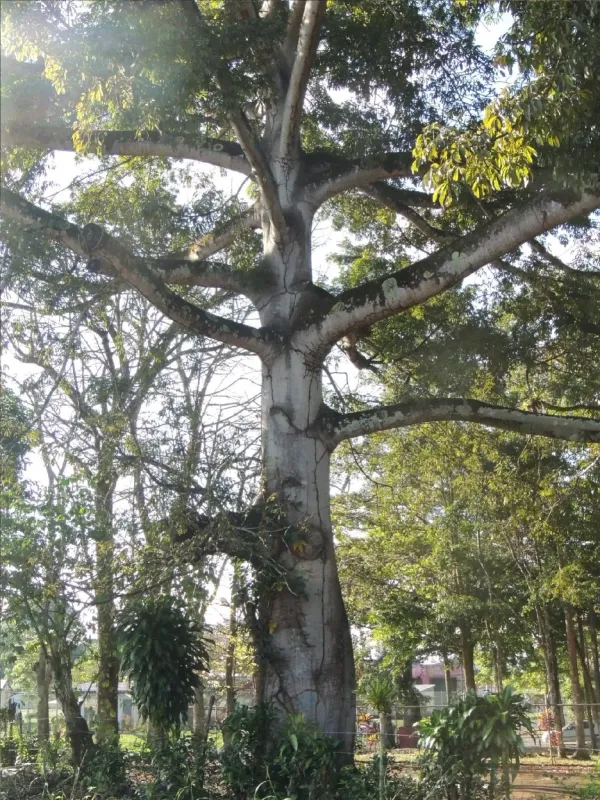
Description
Sowing dates
Ceiba pentandra, commonly known as the kapok tree, is a massive tropical tree belonging to the Malvaceae family. Propagation for commercial purposes is primarily achieved through seeds grown in controlled nursery conditions.
The optimal sowing time aligns with the onset of the rainy season, as consistent soil moisture is critical for successful seed germination and the early development of a robust root system.
Seeds are often pre-treated or soaked to improve germination rates, as the protective outer layer can sometimes hinder rapid water absorption in dry soil conditions.
Transplanting seedlings to their permanent location is recommended once they have reached a height of at least 50–70 cm, ensuring they are sturdy enough to survive environmental stressors.
Planting density is carefully planned to prevent competition for light, with wide spacing allowing the massive canopy of the Ceiba tree to develop fully for maximum productivity.
Growing requirements
This crop thrives in hot, humid tropical climates with temperatures consistently ranging between 25°C and 30°C, and it is intolerant to freezing temperatures or prolonged cold.
The species requires deep, fertile, and well-drained soils, typically favoring alluvial sites; however, it demonstrates adaptability to various soil types if drainage is adequate.
Full sunlight exposure is mandatory for healthy tree development and fruit production; any significant shading from nearby vegetation will severely stunt growth and reduce yield.
While mature trees are somewhat drought-tolerant, consistent irrigation during the first three years of life is essential for establishing the structural integrity of the plant.
Protection from extreme wind is a key management aspect, as the wood is relatively soft and the surface-level root systems can be prone to instability during severe tropical cyclones.
Yield
The primary agricultural output of Ceiba pentandra is kapok, a silky, buoyant, and water-repellent fiber harvested from the tree's numerous seed pods.
A tree typically begins to produce fruit around the age of 5 to 7 years, with commercial yield increasing significantly as the tree matures into its peak production stage.
In optimal conditions, a single mature tree can yield hundreds of pods, resulting in a substantial quantity of processed fiber suitable for insulation and stuffing materials.
Yield metrics are heavily influenced by environmental factors such as rainfall during the flowering period, which is crucial for proper pollination and subsequent fruit set.
Continuous monitoring of fruit development allows farmers to predict harvest times accurately, ensuring that the volume of fiber collected meets commercial quality standards.
Main diseases and pests
The main threats to Ceiba pentandra plantations include wood-boring beetles, which can cause structural damage and weaken the tree, making it susceptible to secondary infections.
Root rot and other fungal diseases are common in areas with poor soil drainage, necessitating careful site selection and the implementation of effective water management systems.
Defoliating insects can significantly impact younger trees, necessitating regular scouting and targeted management to maintain the tree's photosynthetic capacity during early growth stages.
High humidity levels promote the growth of epiphytes on the trunk, which, while not directly lethal, can create a microenvironment that harbors pests or encourages bark rot.
Integrated Pest Management (IPM) strategies, including pruning and the maintenance of soil aeration, are essential for ensuring the long-term health and productivity of the plantation.
Harvesting
Harvesting takes place once the seed pods begin to turn color and crack open, signaling that the kapok fiber inside is mature and dry enough for collection.
Manual or mechanized collection is used depending on the scale of the plantation, with caution taken to prevent the contamination of the fiber with dirt or debris during the process.
Once harvested, the pods undergo a decortication process where the fiber is separated from the seeds, which can then be processed separately for their oil content.
Thorough sun-drying of the collected fiber is mandatory to eliminate moisture, preventing the development of mold and preserving the natural properties of the kapok.
Proper post-harvest storage is vital to maintain fiber quality, ensuring that the final product remains buoyant and free from impurities for its various industrial applications.