
Abroma augustum
Abroma augustum
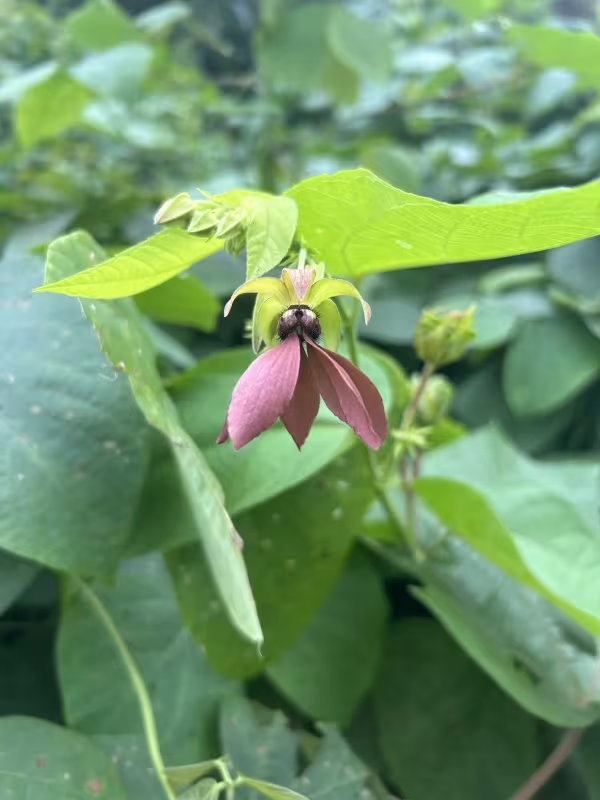
Description
Sowing dates
Abroma augustum, often known as devil's cotton, is a tropical perennial shrub belonging to the Malvaceae family, valued primarily for its fiber.
The sowing process typically commences at the beginning of the rainy season to capitalize on the natural soil moisture levels needed for germination.
Seeds should be pre-treated with warm water soaking to soften the seed coat and improve the overall success rate of uniform emergence.
In field production, seeds are sown in rows with consistent spacing to encourage the development of straight, tall stems, which are essential for high-quality fiber.
As the seedlings grow, early management of weeds is crucial to prevent competition for sunlight and nutrients during the plant's delicate establishment phase.
Growing requirements
This crop requires a tropical or subtropical climate characterized by warm temperatures and significant rainfall throughout the growing season.
Ideal soil conditions include fertile, well-drained loams that prevent waterlogging, as the root system is highly sensitive to excessive moisture.
A stable temperature range between 20 and 30 degrees Celsius is optimal for sustained metabolic activity and vertical stem growth.
Abroma augustum does not tolerate frost, and even moderate cold snaps can cause severe damage to the foliage and stunt the development of the plant.
To maximize biomass, soil nutrient management focusing on nitrogen availability is recommended, alongside maintaining adequate organic matter content.
Yield
The primary economic output of Abroma augustum is its bast fiber, which is known for its impressive strength and durability in industrial applications.
Consistent yield depends heavily on site selection and the implementation of proper cultural practices throughout the active vegetation cycle.
High-quality harvest requires the production of stems that are uniform in thickness, as this quality dictates the yield of usable long fibers.
Beyond fiber, the plant produces seeds that can be harvested and stored for future planting cycles, contributing to the self-sustainability of the farm.
Optimal management strategies can lead to substantial harvests in a relatively short period, making it a viable crop for tropical farming systems.
Main diseases and pests
Root rot remains the most significant threat to Abroma augustum, particularly in poorly drained soils or during periods of excessive rainfall.
Leaf-eating caterpillars and aphids are the most common pests that can undermine plant health and reduce overall photosynthetic capacity.
Integrated pest management, including regular field monitoring and the use of organic deterrents, is recommended to manage populations effectively.
Maintaining proper spacing between rows helps improve air circulation, which significantly reduces the risk of fungal infections within the crop canopy.
Crop rotation should be practiced to break the life cycles of soil-borne pathogens that commonly affect plants within the Malvaceae family.
Harvesting
Harvesting is typically timed to coincide with the early flowering stage, when the fiber content and quality in the stem reach their maximum potential.
The process involves cutting the stems at the base, followed by bundling them for retting, a critical step for separating the fiber from the bark.
Retting is traditionally done in water, where natural microbial action breaks down the pectin bonds, allowing for easier fiber extraction.
After retting, the fibers are thoroughly washed and sun-dried until the moisture content drops to a level suitable for safe, long-term storage.
Post-harvest sorting based on fiber length and color is performed to ensure the product meets market standards for textile or paper production.