
Pomegranate
Punica granatum L.
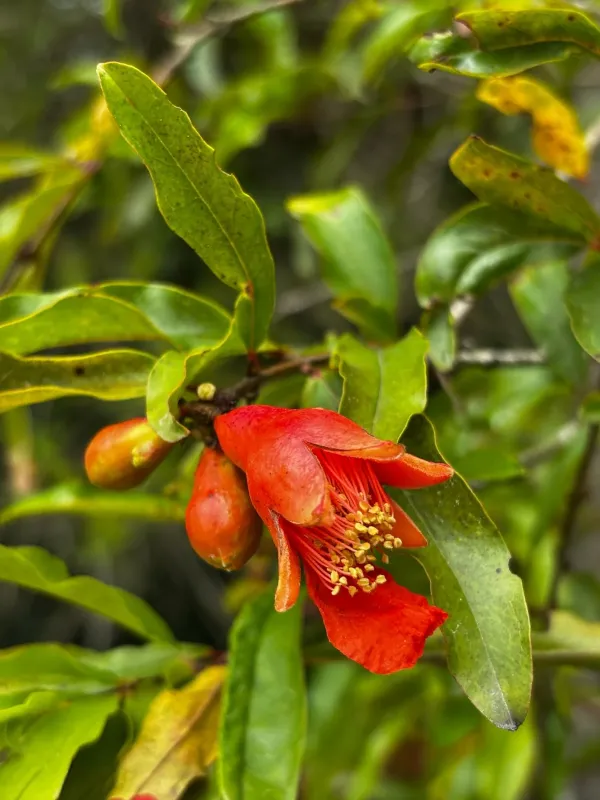
Description
Growing requirements
Pomegranate (Punica granatum L.) is a perennial deciduous shrub or small tree belonging to the Lythraceae family. It is widely cultivated for its edible fruits, which are highly valued for their nutritional and medicinal properties.
The species originated in the region extending from modern-day Iran to northern India. It thrives in regions with Mediterranean-type climates, characterized by hot, dry summers and mild winters, which are essential for fruit maturation.
The plant requires full sun exposure to produce high-quality yields. It is remarkably tolerant to various soil types, but performs best in well-drained, fertile loams with a slightly alkaline pH level. Poor drainage often leads to root collar rot.
Water management is a key aspect of cultivation. Although established trees are drought-tolerant, supplemental irrigation during the flowering and fruit-set stages is crucial to prevent fruit drop and splitting.
Cultural practices include training the pomegranate into a tree with 3-4 main scaffold branches or maintaining it as a multi-stemmed shrub. Annual pruning is necessary to remove suckers and improve light penetration into the canopy.
Yield
Yield varies significantly based on the cultivar and orchard density. Under standard commercial conditions, an average mature tree can produce between 50 to 100 fruits per season, depending on tree vigor and horticultural management.
Main diseases and pests
Major pests affecting pomegranate include the pomegranate butterfly (Virachola isocrates), aphids, and mealybugs. These pests can cause severe damage to flowers and maturing fruit, leading to significant economic losses.
Common diseases include fungal pathogens causing leaf spots and fruit rot, such as Cercospora and Alternaria. Integrated pest management, including sanitation and appropriate fungicide application, is vital for success.
Harvesting
Harvesting usually begins in autumn when the fruit reaches its full color and the skin becomes thin and leathery. Fruits are harvested by clipping the stem close to the base, ensuring they are not damaged during handling.