
Carolina clubmoss
Pseudolycopodiella caroliniana
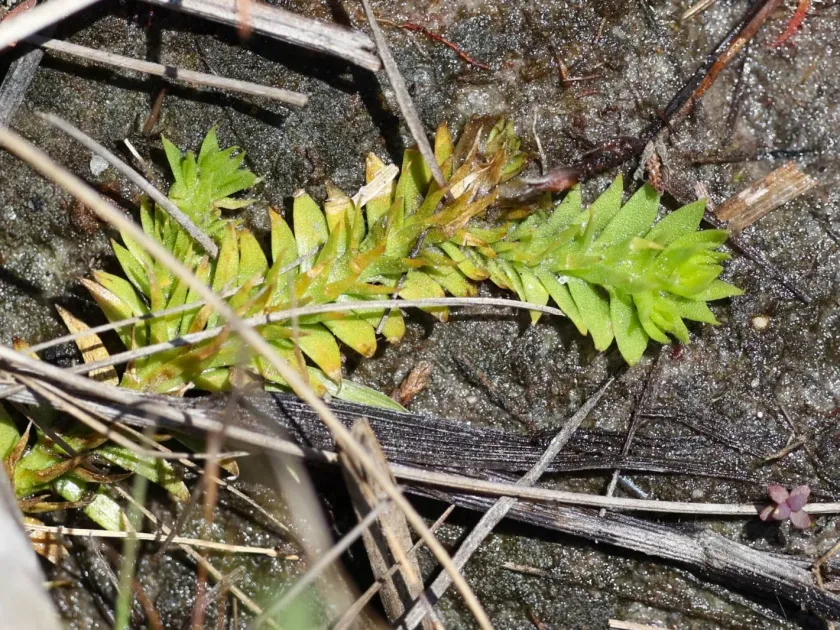
Description
Growing requirements
Carolina clubmoss (Pseudolycopodiella caroliniana) is a perennial herbaceous plant belonging to the Lycopodiaceae family. It is a distinct species that typically thrives in moist, open environments such as wetlands and boggy savannahs.
Its natural range is widespread, appearing across various regions in North America, tropical parts of Africa, and select areas in Asia. The species is highly specialized, requiring specific environmental conditions to survive and reproduce.
Regarding growth requirements, this plant prefers acidic, nutrient-poor substrates. In cultivation, a mix of sand and peat is generally recommended to maintain the necessary moisture levels while preventing the substrate from becoming waterlogged.
Botanically, the species is characterized by its creeping horizontal stems that form dense, low-growing mats. These mats produce upright, slender stalks that support spore-bearing strobili, rising prominently above the basal foliage.
While not a traditional agricultural crop, the species holds significant value for botanical study and restoration ecology. It is occasionally included in specialized bog garden collections where precise environmental controls can be maintained.
Main diseases and pests
The primary threats to Pseudolycopodiella caroliniana involve the destruction of its native wetland habitats. Drainage projects and land development are the leading causes of decline for wild populations.
The plant is susceptible to fungal diseases if air circulation is poor or if the substrate stays excessively stagnant. Proper sanitation and drainage are critical to preventing fungal decay in controlled settings.
Pests such as slugs or soil-borne nematodes can pose risks in greenhouse environments. Integrated pest management strategies are necessary to protect the slow-growing plants from being consumed or stressed.
Competition from invasive plant species is a significant challenge. Due to its slow growth rate, the clubmoss cannot compete with aggressive weeds for sunlight and nutrients, requiring consistent maintenance.
Sensitivity to fertilizers is a key limiting factor. As an oligotrophic plant, it is intolerant to high levels of nitrogen or phosphorous, which can burn the roots and disrupt its delicate nutrient absorption system.