
Hoslundia opposita
Hoslundia opposita
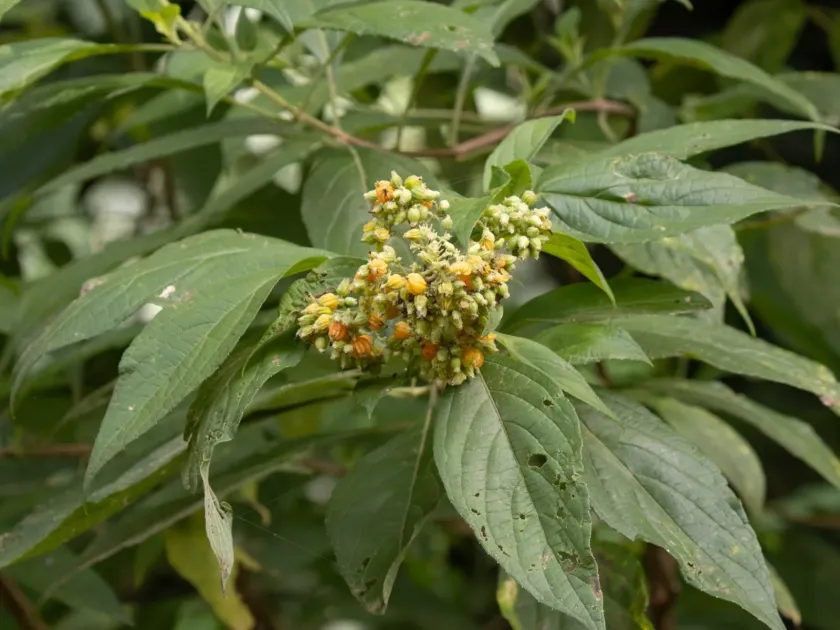
Description
Sowing dates
Propagation of Hoslundia opposita in its natural habitat occurs primarily through seeds dispersed by birds that feed on the succulent fruits. For agricultural purposes, it is recommended to sow seeds in well-drained soil at the beginning of the rainy season to ensure optimal moisture levels for germination.
The seeds require pre-sowing preparation, including stratification or soaking, which helps to increase the germination rate significantly. Transplanting seedlings into open ground should be carried out only after the weather has stabilized and the risk of temperature fluctuations has passed.
Maintaining proper spacing is essential to ensure adequate air circulation around the shrub, as the plant is prone to dense branching. An optimal distance of at least 1.5 to 2 meters between bushes is required to support the healthy development of the root system.
Vegetative propagation via cuttings allows for faster establishment of mature specimens. Cuttings should be planted in a substrate rich in sand and humus, maintaining high humidity until rooting is successfully achieved.
All planting material must be carefully inspected for signs of fungal infections, which is a critical step in site preparation before establishing larger plantations.
Growing requirements
Hoslundia opposita belongs to the Lamiaceae family and is a perennial shrub native to tropical regions of Africa. The plant prefers well-lit areas, as insufficient exposure to sunlight can lead to a reduced concentration of essential oils in the foliage.
For successful cultivation, sandy loam or loamy soils with a neutral to slightly acidic pH are ideal. While the plant exhibits high drought tolerance, regular irrigation is necessary during the flowering stage to ensure a bountiful fruit harvest.
A stable temperature range between 20 and 30 degrees Celsius is optimal for growth. The species is sensitive to frost, making cultivation in temperate climates feasible only within greenhouses or other protected environments.
Proper drainage is a key factor, as stagnant water in the root zone quickly leads to the development of root rot. Although the shrub can grow in nutrient-poor soils, it responds well to organic fertilizers applied during active growth cycles.
The plant shows high adaptability to various landscapes, including savannahs and forest margins, which makes it a promising candidate for agroforestry systems.
Yield
The economic use of Hoslundia opposita is primarily centered on its medicinal properties, as well as the local consumption of its berries as food. Fruit yield depends on the age of the plant and the intensity of care, typically resulting in several kilograms per mature shrub.
Leaves can be harvested throughout the entire vegetation period, providing a consistent source of raw material for pharmaceutical applications. Regular pruning encourages the growth of new shoots and enhances the overall productivity of the crop.
The quality of the harvest depends on timing; fruits should be fully mature, characterized by an orange-red color. Leaves intended for medicinal use are best gathered before the onset of the active flowering phase.
Economic efficiency increases when creating mixed plantations, where Hoslundia serves as a ground cover plant that helps prevent soil erosion. The product finds demand both in local markets and as an ingredient for various herbal preparations.
Large-scale studies regarding industrial yields are currently limited, which presents significant opportunities for selective breeding to develop high-productivity varieties.
Main diseases and pests
Despite its general resistance to adverse environmental factors, Hoslundia is susceptible to attacks by specific pests common to tropical regions. Scale insects and spider mites pose the primary threat, as they feed on the sap of young leaves.
Fungal diseases, such as leaf spot and powdery mildew, frequently occur under conditions of excessive humidity and poor canopy ventilation. Copper-based fungicides are effective in suppressing these pathogens.
Damage to the root system by soil-dwelling insect larvae can lead to the stunting of the entire plant. Utilizing biological insecticides is the preferred method of protection to maintain the environmental purity of the harvested material.
Agronomists recommend conducting periodic inspections of the undersides of leaves, where pest colonies tend to aggregate. Timely removal of infected plant parts helps prevent the spread of infections throughout the entire plantation.
Disease prevention relies on maintaining site cleanliness, timely weeding, and ensuring an optimal irrigation schedule.
Harvesting
Harvesting Hoslundia fruits is performed manually as they ripen, as the berries have a short shelf life and require immediate processing or consumption. After harvesting, fruits should be stored in a cool place to preserve their flavor profiles.
To harvest the leaves, shoots are cut and dried in the shade under well-ventilated conditions. Exposure to direct sunlight must be avoided, as it leads to the degradation of the active volatile compounds in the essential oils.
The harvesting process must be performed carefully to avoid damaging the main skeletal branches of the shrub, which could reduce the plant's vitality for the following season. All cutting tools must be sanitized prior to use.
The timing of the harvest depends on the specific end use: for maximum bioactive compound content, collection should take place during morning hours. Properly dried material can be stored for up to a year without significant loss of quality.
Post-harvest processing success depends on strictly adhering to temperature controls and ensuring the storage area remains free of mold, making humidity monitoring critical during the drying process.