
Hanguana
Hanguana
Hanguana is a genus of perennial herbaceous plants that constitutes the monotypic family Hanguanaceae. These plants are of particular interest as rare representatives of the flora of tropical Asia and Australia, possessing specific morphological features.
What the section contains


Hanguana
The origin of the genus is linked to the humid tropical forests of Southeast Asia, including regions in Malaysia, Indonesia, and Sri Lanka. Large-scale agricultural cultivation does not exist, but the plant is actively studied in botanical gardens as a promising candidate for introduction.
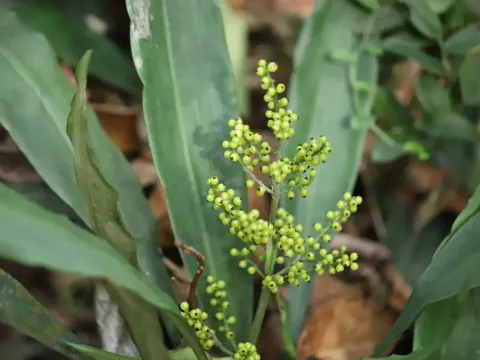
Botanical characteristics include the presence of erect or slightly decumbent stems and leathery leaves, often with parallel venation. The inflorescences are terminal panicles composed of small bisexual or unisexual flowers, which is a key diagnostic feature of the family.
Economic use of Hanguana is limited. It is primarily valued as an ornamental species in conservatory collections, while some indigenous species have potential utility in traditional medicine within their native regions.
Scientific interest in Hanguana stems from its phylogenetic position, which helps clarify evolutionary processes within the order Commelinales. Geneticists investigate the genus to refine the classification of tropical monocots.
The plant has high requirements for air and soil humidity, reflecting its origin in rainforests. The optimal substrate consists of loose, humus-rich soils with good drainage and a slightly acidic pH level.
The temperature must remain consistently warm throughout the year. Hanguana is sensitive to temperatures falling below 15–18 degrees Celsius, so in temperate climates, cultivation is only possible in greenhouse conditions.
Lighting should be diffused, as direct sunlight causes burns on the delicate leaves. In greenhouse environments, the use of shading to mimic the conditions of the tropical forest understory is highly recommended.
Regular watering is essential to prevent the root ball from drying out, though water stagnation in the tray is strictly avoided. During active growth, the application of mineral fertilizers for foliage plants at half-strength is recommended.
Propagation of Hanguana is achieved through both seed sowing and vegetative methods, such as rhizome division. In laboratory settings, tissue culture techniques allow for the production of planting material for research purposes.
Under greenhouse conditions, Hanguana may be affected by typical ornamental pests. Spider mites and mealybugs represent the greatest threat, especially when air humidity is insufficient.
Fungal diseases, such as root rot, occur when watering regimes are mismanaged or soil drainage is inadequate. Prevention relies on adhering to strict agrotechnical standards and sterilizing the soil mix before planting.
Bacterial leaf spots can emerge in poorly ventilated spaces. Regular greenhouse ventilation and the maintenance of an optimal microclimate significantly reduce the risk of pathogen outbreaks.
Non-infectious disorders are often linked to chlorosis caused by micronutrient deficiencies or an improper substrate pH. Monitoring water and soil composition helps to prevent physiological development issues.
If pests are detected, the use of biological control methods or treatment with systemic insecticides approved for use in conservatory environments is recommended.