
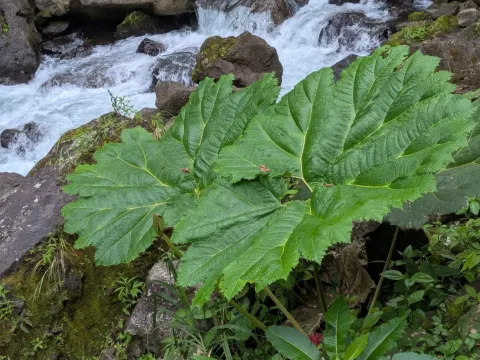
Gunnera
Gunnera
Gunnera, a genus within the family Gunneraceae, consists of perennial herbaceous plants typically propagated by rhizome division in early spring. Sexual reproduction via seeds is more complex, as they require stratification and constant high humidity to break dormancy.
What the section contains
 Chilean rhubarb
Gunnera tinctoria
Chilean rhubarb
Gunnera tinctoria
 Creeping Gunnera
Gunnera prorepens
Creeping Gunnera
Gunnera prorepens
 Giant rhubarb
Gunnera manicata
Gunnera albocarpa
Gunnera albocarpa
Gunnera antioquensis
Gunnera antioquensis
Giant rhubarb
Gunnera manicata
Gunnera albocarpa
Gunnera albocarpa
Gunnera antioquensis
Gunnera antioquensis
 Gunnera cryptica
Gunnera flavida
Gunnera flavida
Gunnera cryptica
Gunnera cryptica
Gunnera flavida
Gunnera flavida
 Gunnera magellanica
Gunnera magellanica
Gunnera magellanica
 Gunnera strigosa
Gunnera strigosa
Gunnera strigosa
Gunnera
The optimal planting time in the garden is late spring, once the risk of night frost has completely passed. Planting holes should be large and enriched with compost or well-rotted manure to support the rapid development of the massive leaves characteristic of this species.
Choosing a site is critical: the plant requires a sheltered location protected from strong winds, which can easily tear the giant, fragile leaf blades. A spacing of at least 2 to 3 meters between individual plants is necessary for proper growth and display.
For seed propagation, sowing should be done indoors in late winter using a lightweight, moist, and sterile medium. Maintaining steady temperature and consistent moisture is essential, as the seedlings are sensitive to any fluctuations in their microenvironment.
Hardening off seedlings before transplanting is a mandatory procedure to ensure their successful establishment in the open ground. A gradual transition helps the plant adapt to sunlight and wind, reducing potential transplant shock.
Gunnera is renowned as a moisture-loving plant, often referred to as a giant bog plant, making it perfect for pond-side planting. The soil must remain constantly moist, yet it requires good drainage to prevent the large fleshy rhizomes from rotting during the dormant phase.
Rich, humus-heavy soils, particularly peaty or loamy substrates with a neutral to slightly acidic pH, are ideal. The plant shows little tolerance for drought, making frequent and deep irrigation essential, especially during dry summer months.
Temperature management is the most challenging aspect of cultivation in temperate climates. While many species are hardy, the rhizomes must be covered with a thick layer of mulch, dry leaves, and burlap during winter to protect them from deep frost.
Regarding light, Gunnera performs best in partial shade. While it can survive in full sun, it demands significantly more water, and the leaves are prone to burning or wilting if the root zone dries out even slightly during peak heat.
Fertilization should be consistent throughout the growing season, focusing on nitrogen-rich organic amendments that encourage the production of its iconic foliage. Providing these nutrients helps ensure the plant reaches its full ornamental potential.
The primary threat to Gunnera is cold damage, especially from late spring frosts that can kill off emerging foliage. Proper winter mulching and protective coverings for new growth in spring are vital to the plant's health and longevity.
Slugs and snails are the most common pests, as they find the large, succulent leaves highly palatable. Control methods often include the use of grit, copper barriers, or selective organic baits to keep these mollusks away from the foliage.
Root rot is a major risk if the soil remains waterlogged in winter or if drainage is insufficient. Ensuring the rhizomes are not sitting in standing water during the dormant season is a key preventative measure for all gardeners.
Stunted growth or chlorosis often indicates an underlying issue with soil pH or nutrient deficiency. Regular inspection and soil testing can help identify whether the plant needs specific amendments to maintain its deep green coloration.
While generally robust, weakened plants may become susceptible to secondary fungal infections. Maintaining optimal moisture and avoiding sudden environmental stress are the best ways to ensure the plant remains healthy and resistant to diseases.