
Chilean rhubarb
Gunnera tinctoria
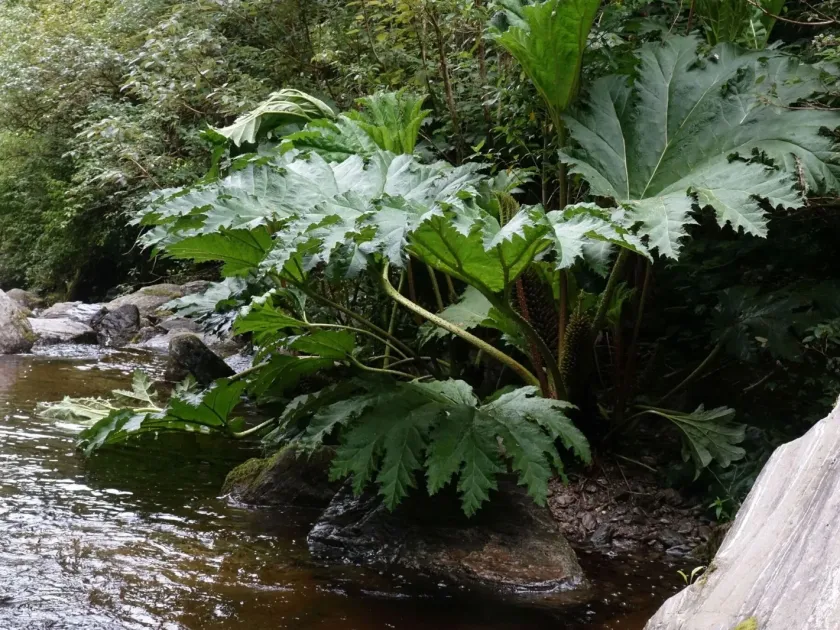
Description
Growing requirements
Chilean rhubarb (Gunnera tinctoria) is a spectacular giant herbaceous perennial from the Gunneraceae family, famous for its massive, architectural foliage that serves as a focal point in landscapes.
Native to the moist regions of Chile and Argentina, this plant thrives in temperate climates where it can access abundant water supplies throughout the entire growing season.
Agricultural success depends on providing a deep, nutrient-rich soil that is constantly moist. It is ideally suited for planting near pond edges or in boggy areas where water stress is impossible.
The plant requires a sheltered location protected from strong winds, as the large leaves have a high surface area and can easily shred or snap during turbulent weather conditions.
Winter protection is mandatory in many regions. Since the plant is sensitive to frost, the crown must be heavily mulched with straw or leaves to ensure survival during the dormant winter months.
Main diseases and pests
Slugs and snails are the most significant pests for Gunnera tinctoria. They are particularly attracted to the large, succulent leaves and can defoliate young growth rapidly.
Root rot is a potential risk if the soil becomes waterlogged without proper drainage. While the plant loves water, stagnant conditions combined with cold temperatures can cause the rhizomes to decay.
Fungal leaf spot diseases may appear during seasons with high humidity and poor ventilation. Keeping the surrounding area free of debris helps to reduce the spread of fungal spores.
Effective pest control strategies include the use of copper tape or organic slug pellets around the base of the plant to create a protective perimeter against gastropods.
For overall plant health, manual inspection of the foliage during the early stages of growth is recommended to detect any initial signs of herbivory or localized infection before they become widespread.