
Creeping Gunnera
Gunnera prorepens
Description
Growing requirements
Creeping Gunnera (Gunnera prorepens) is a small, mat-forming perennial herb that belongs to the Gunneraceae family. Unlike its more famous giant relatives, this species spreads via creeping stems, making it an excellent ground cover for specific ecological niches.
The plant is native to New Zealand, where it naturally inhabits wet environments such as stream banks, swampy marshes, and damp subalpine grasslands. It thrives in locations where high humidity and constant soil moisture are provided throughout the entire year.
To successfully cultivate this plant, one must provide moist, acidic, and organic-rich soil. It is essential to choose a location that offers partial shade, as the plant is susceptible to heat stress and leaf scorch if exposed to intense, direct afternoon sunlight.
Agrotechnical practices center on irrigation management. The soil must never be allowed to dry out completely. Applying a layer of organic mulch around the plant helps retain soil moisture and also provides a degree of winter protection against frost.
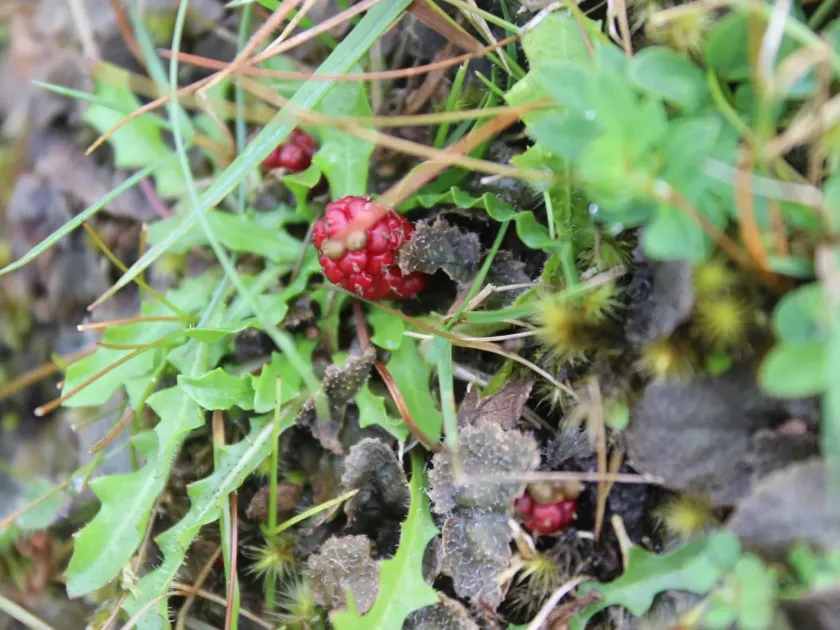
In terms of economic and horticultural use, Creeping Gunnera is valued for its unique foliage and distinct reddish flower spikes. It is widely used in landscape design to stabilize damp areas around water features or as a specialized ground cover in bog gardens.
Main diseases and pests
The primary threats to the health of Gunnera prorepens include root rot and fungal infections, which are often triggered by stagnant water and poor soil drainage. Ensuring that the soil stays damp but not waterlogged is key to preventing these issues.
Slugs and snails are the most common pests, as they are attracted to the succulent-like leaves of the plant in high-humidity environments. Integrated pest management, including regular monitoring and the use of physical barriers, is highly recommended for control.