
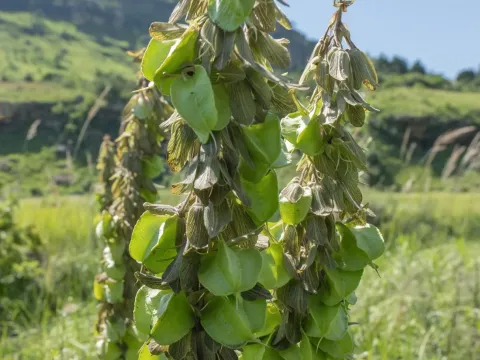
Melianthus
Melianthus
Melianthus is an ornamental shrub belonging to the Melianthaceae family, native to South Africa. The plant is highly regarded for its large, pinnate leaves with serrated margins, which emit a distinctive fragrance when touched or crushed.
What the section contains


Melianthus
Successful cultivation requires a sunny location with light afternoon shade. The plant prefers moderately fertile, well-draining soil, as waterlogging in the root zone can lead to the development of fungal pathogens and root rot.
The optimal temperature range for Melianthus is 18–25 degrees Celsius. In temperate climates, the plant is considered tender and requires protection from hard frosts, often being grown as a container plant or a seasonal perennial.
A key aspect of agronomy is regular irrigation during the active growing season, although the soil must be allowed to dry slightly between waterings. Applying balanced mineral fertilizers during the growing phase promotes vigorous foliage development.
The primary use of Melianthus is ornamental. Due to its striking architectural form and exotic appearance, it is frequently used in landscape design and is occasionally utilized in traditional medicine practices within its native regions.
Major threats to Melianthus include spider mites and aphids, which often infest young leaves in low-humidity conditions. Regular plant monitoring and the application of appropriate insecticides help keep pest populations under control.
Excessive soil moisture often results in root rot, making strict water management and the provision of effective drainage in pots or outdoor beds absolutely essential for plant health.