
Fumaria martinii
Fumaria martinii
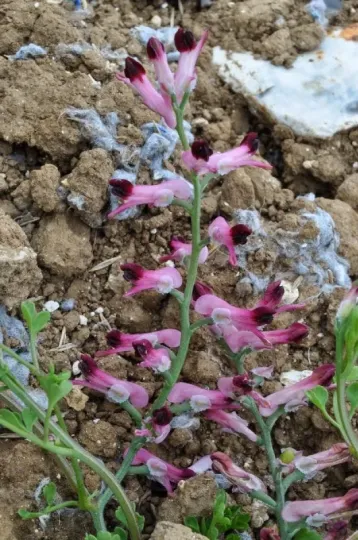
Description
Growing requirements
Fumaria martinii is an annual herbaceous plant belonging to the Papaveraceae family. It is recognized for its delicate foliage and unique flower structure, typical of the Fumaria genus, though it possesses specific diagnostic features that distinguish it from the more common Fumaria officinalis.
The plant originates from the Mediterranean and Western European regions, thriving in temperate climates. It is typically found in disturbed habitats, including field edges, fallow lands, and agricultural landscapes where human activity provides regular soil disturbance.
In terms of edaphic requirements, this species favors well-drained, nutrient-rich soils. It shows a preference for substrates with a slightly alkaline or neutral pH, which is characteristic of the limestone-based regions often associated with its natural distribution in Southern Europe.
Climatic adaptability is a crucial aspect of its life cycle. Fumaria martinii acts as a winter annual in many regions, germinating in the autumn or early spring to take advantage of soil moisture before the heat of summer restricts vegetative growth and forces the plant into seed production.
From an agricultural standpoint, it is primarily viewed as a non-crop species within agroecosystems. While it does not provide commercial yields, understanding its biological requirements helps agronomists monitor field conditions and the successional changes occurring in unmanaged or integrated farm plots.