
Giant honey flower
Melianthus major
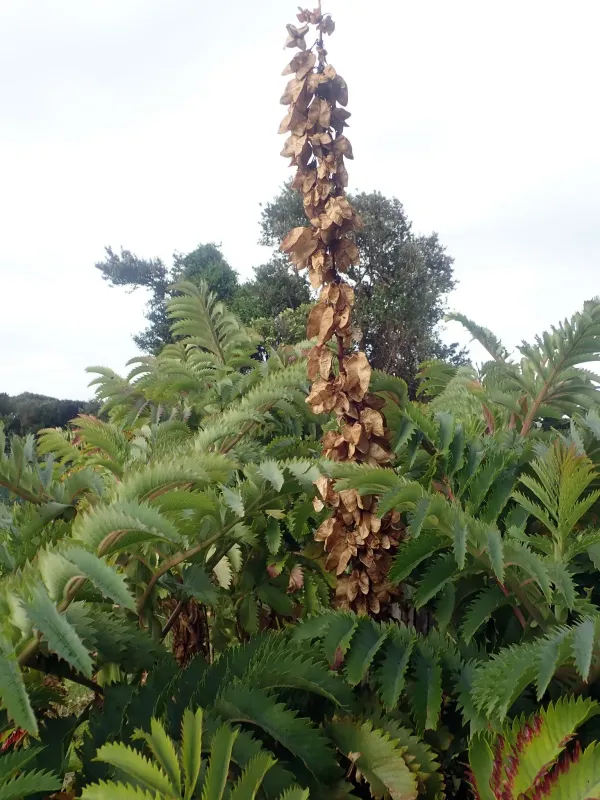
Description
Sowing dates
The propagation of Melianthus major is primarily done via seeds sown in early spring in controlled greenhouse conditions at temperatures around 20 degrees Celsius.
Seeds require a well-draining, lightweight compost mix. They should be covered lightly and kept in a bright, humid environment to facilitate germination within two to three weeks.
Seedlings are pricked out into individual pots once they have developed their first true leaves, ensuring they are not exposed to direct scorching sunlight initially.
Hardening off is crucial before transplanting into the garden. The plants should be gradually accustomed to external temperatures over a period of two weeks.
Vegetative propagation is also an option; stem cuttings taken in late summer should be placed in moist sand and kept under plastic covers until rooting occurs.
Growing requirements
Melianthus major, a member of the Melianthaceae family, originates from South Africa. It thrives in full sun and requires sheltered conditions to protect its large foliage from mechanical wind damage.
The plant prefers rich, loamy, and fertile soils that offer excellent drainage. Poorly drained soil leads to crown rot and loss of vigor, especially during cooler months.
Watering should be consistent throughout the growing season. The plant is drought-tolerant once established, but optimal foliage growth requires regular moisture.
It is not fully frost-hardy in temperate climates, needing heavy mulching or protection in winter. In regions with severe freezes, container culture is recommended.
Regular fertilization with balanced liquid feed during the active spring growth phase supports the development of its dramatic, deeply serrated foliage.
Main diseases and pests
The most common pests include aphids and spider mites, particularly when the plant is kept in dry, warm indoor environments or during long heatwaves.
Fungal issues like powdery mildew may arise if air circulation is insufficient or if the foliage remains wet for extended periods in high humidity.
To control aphid infestations, insecticidal soaps or neem oil are effective and environmentally friendly solutions for this ornamental shrub.
Root rot is the most serious threat, usually caused by overwatering or compacted, poorly draining soil. Good soil structure is the best preventative measure.
The plant is known to be toxic if ingested, containing chemical compounds like bufadienolides. Gloves should always be worn when pruning or handling the plant.